
Where to Buy a Farm Jeep?
If you answered “At your local Willys dealership,” you would be only partially correct. You might also say at the local farm, implement, or feed store. Willys had dealerships within non-automotive establishments. This fact is part of a much larger story about the challenges of selling this new technology. We will look at the history of selling the Jeep in a small Missouri farm town.
Background
We recently received an email from a couple in Missouri. They were remodeling a 1940s home and found a sealed room in the basement. When they broke it open, the only contents were film mailing canisters. The labels indicated that they were Willys Jeep promotional films and had been shipped to a local Willys dealership. This story is still being written, and we will return to the mystery of why someone would hide those films for seventy-five years. For us, it was an opportunity to learn about the history of one distributor/dealership near Kansas City. This is part of a long-term project on how the Farm Jeep was marketed and sold. Consider these some opening notes.
The film canisters were addressed to Central Willys, Marshall, Missouri. We began our research by searching Newspapers.com. We used the clippings we found, along with some recently discovered data that 20% of early Willys dealers were agricultural implement dealers, to build this story. The 20% figure is unverified and is a working assumption for now. Here is what we found.
Central Willys
The report that 20% of early Willys dealers were agricultural implement dealers is vividly illustrated in the history of Marshall, Missouri. By analyzing the marketing shifts of Central Willys Co. and its local partners, we see a company balancing two identities: a rugged provider of farm “power units” and a sophisticated metropolitan distributor chasing the burgeoning Aero Willys passenger car market.
1. The Post-War Generalist (1946)
In the immediate wake of WWII, the Jeep was marketed as a prized commodity in a world hungry for goods. At the Farm Supply Co. on West Arrow Street, the Jeep was the centerpiece of a diverse, utilitarian inventory.
- Inventory: “Willys Jeeps” were listed alongside anti-freeze, radiant gas heaters, Quonset buildings, and even new combat boots.
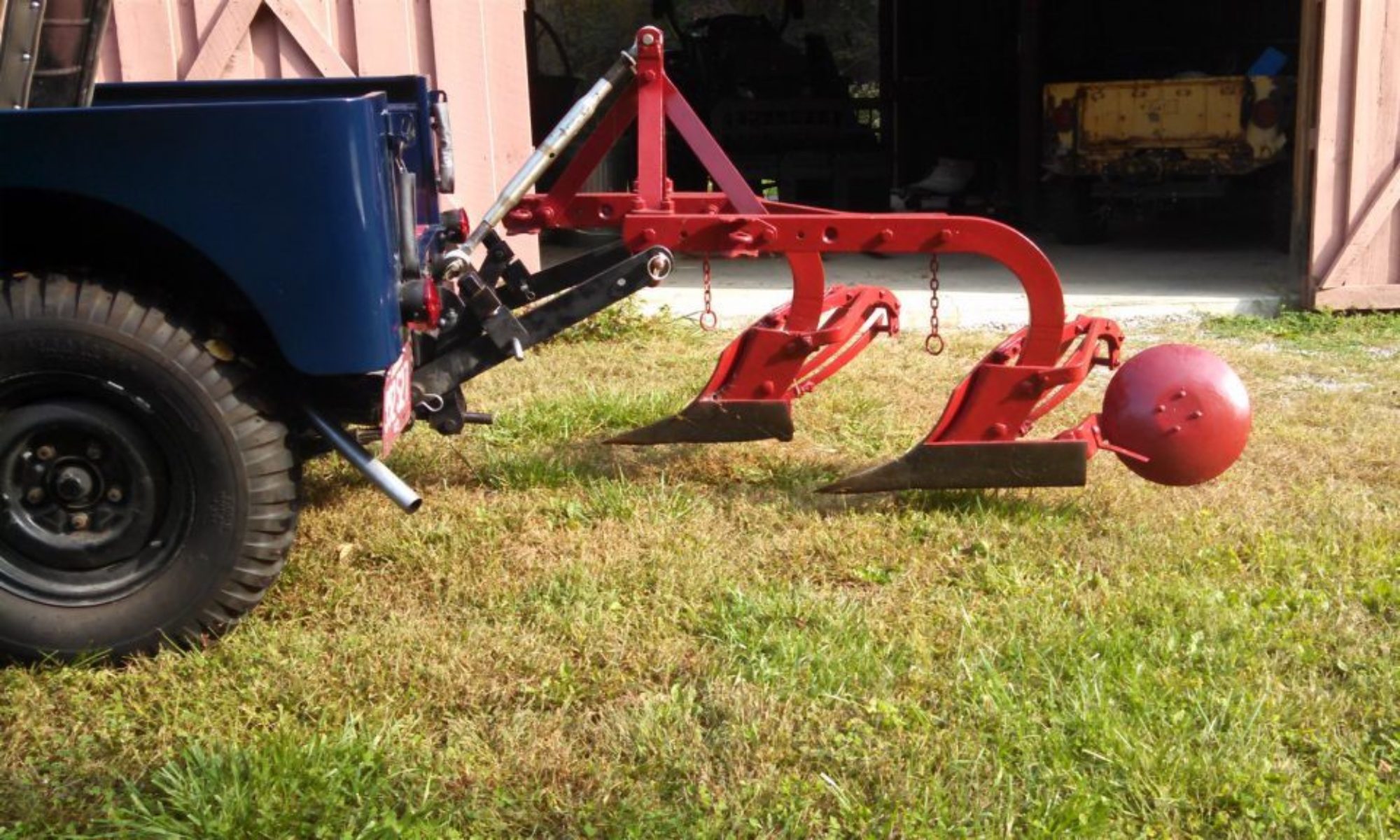
- Agricultural Roots: The Jeep shared ad space with heavy farm hardware, such as mechanical hoists for wagons and Moline plows.
2. The Rise of the Regional Distributor (1950–1951)
By 1950, Russell B. Nicholas had established Central Willys Co. as a dominant regional distributor. Nicholas focused on the Jeep as a specialized service tool rather than just a vehicle.
- Jeep-A-Trench: Central Willys marketed “Custom Ditching” services using the Jeep-A-Trench, capable of digging lines for field drainage and foundations at “lowest cost”.
- Sales Success: Nicholas’s success was national; he tied for first place in a Willys nationwide sales contest in 1950.
- Dealer Recruitment: The company actively recruited new dealers for the “exclusive line” of 4-wheel drive units, including trucks and station wagons.
3. The Pivot to “Magic in Motion” (1952–1953)
The turning point for Central Willys came in 1952 when the company purchased and remodeled the El Torreon ballroom in Kansas City for their new headquarters. As the company moved into this 16,000-square-foot metropolitan facility, the marketing focus shifted heavily toward the Aero Willys.
- The Aero Focus: Large display ads promised an “Airborne” ride and “Magic in Motion,” emphasizing style, comfort, and fuel economy for the 6-passenger car market.
- Secondary Utility: In these distributor-level ads, the Universal Jeep was often secondary, framed as the “world-famed all-purpose workhorse” that anchored the brand’s rugged reputation while the passenger cars took center stage.
4. The Implement Dealer Resurgence (1954–1956)
While the distributor focused on the Aero market, the local Marshall dealer, Farm Supply Co., remained deeply embedded in the agricultural community.
- The Farm Power Picture: Regional ads in the Weekly Star Farmer emphasized that a farm’s “power picture” was incomplete without the traction and versatility of a Jeep for field work and towing.
- Community Integration: Farm Supply Co. positioned itself as an agricultural pillar, running ads to congratulate the Future Farmers of America (FFA) on their 27th anniversary.
- The Implement Mix: By 1954, they were selling used Jeeps alongside legendary agricultural brands like John Deere, Case, Oliver, and David Bradley.
So what does all of this mean?
It means we have a lot of work ahead of us. First, we need to research the “20% of Jeeps were sold through agricultural implement dealers.” It will be interesting to see whether that figure remains constant over the years. I’m guessing not, but the only way to find out is to search newspaper ads.
The other, but not optimal, approach is to create an inventory of distributors and their dealerships. Others have tried this, and there has been recent interest in renewing those efforts. We might help, but we have too many other irons in the fire at the moment.
For now, it means you will need to wait for the rest of the story. As stated, this is the beginning of a long-term project. But I’m guessing we might take some time to help the homeowners solve the Willys films-in-a-sealed-room mystery.
Stay tuned.
FC