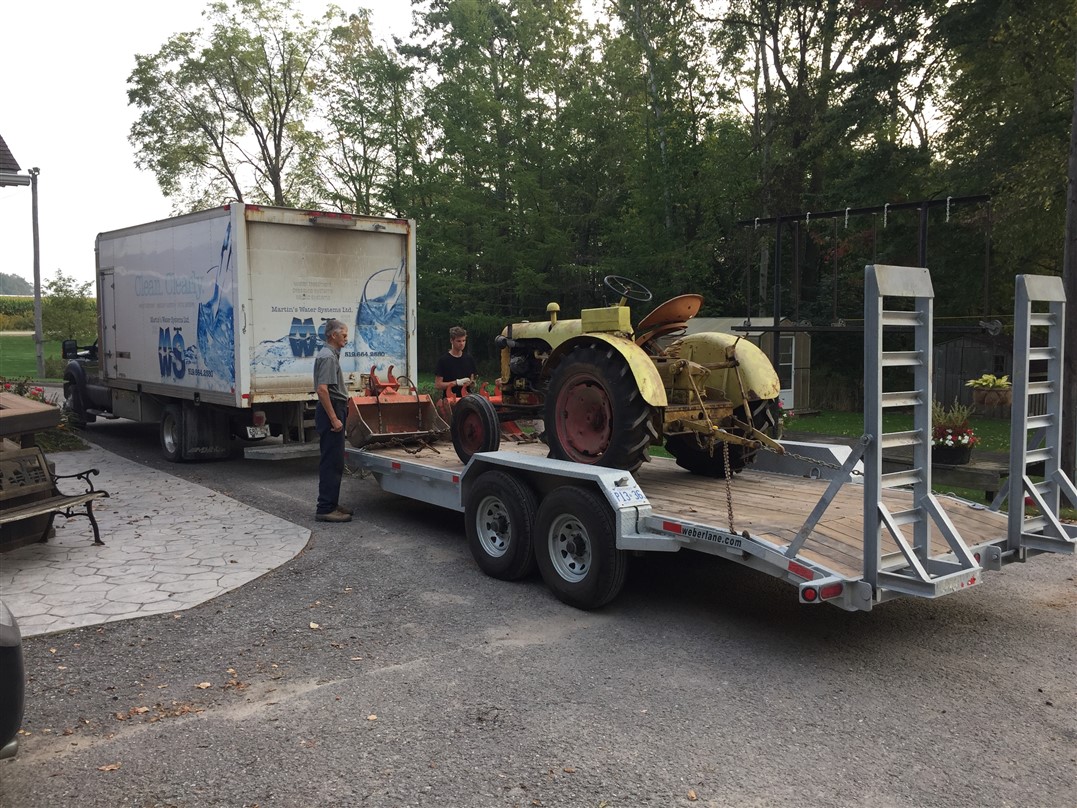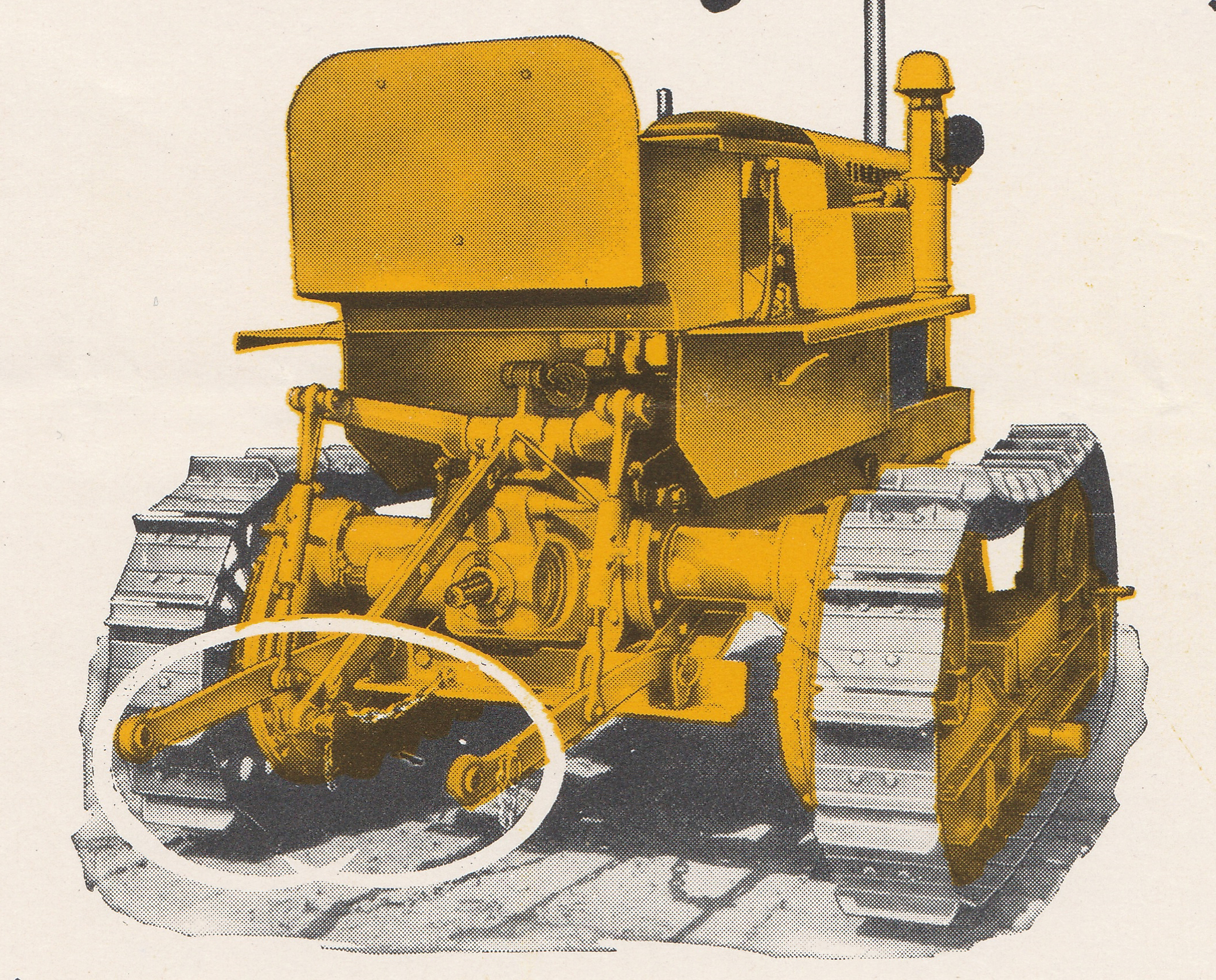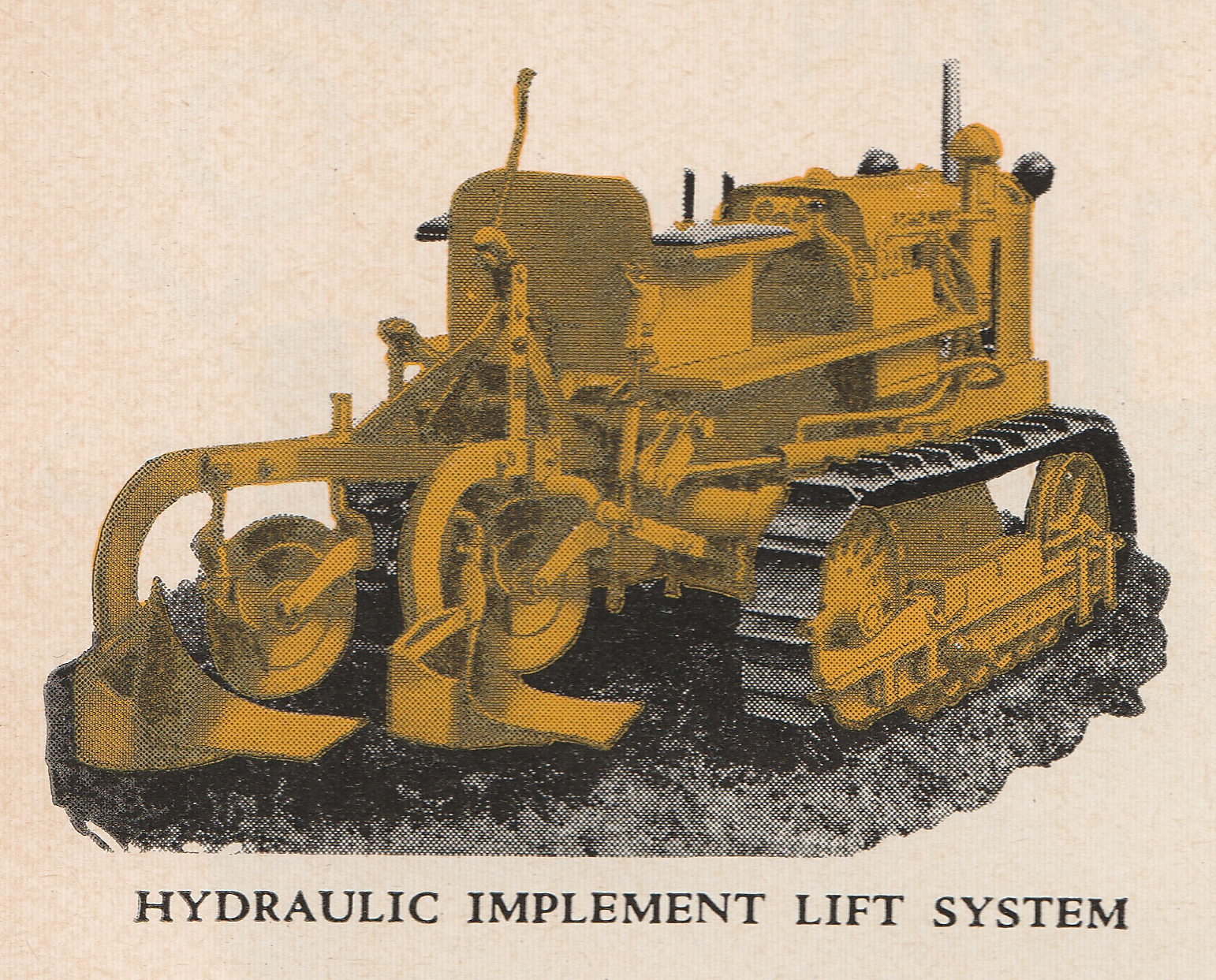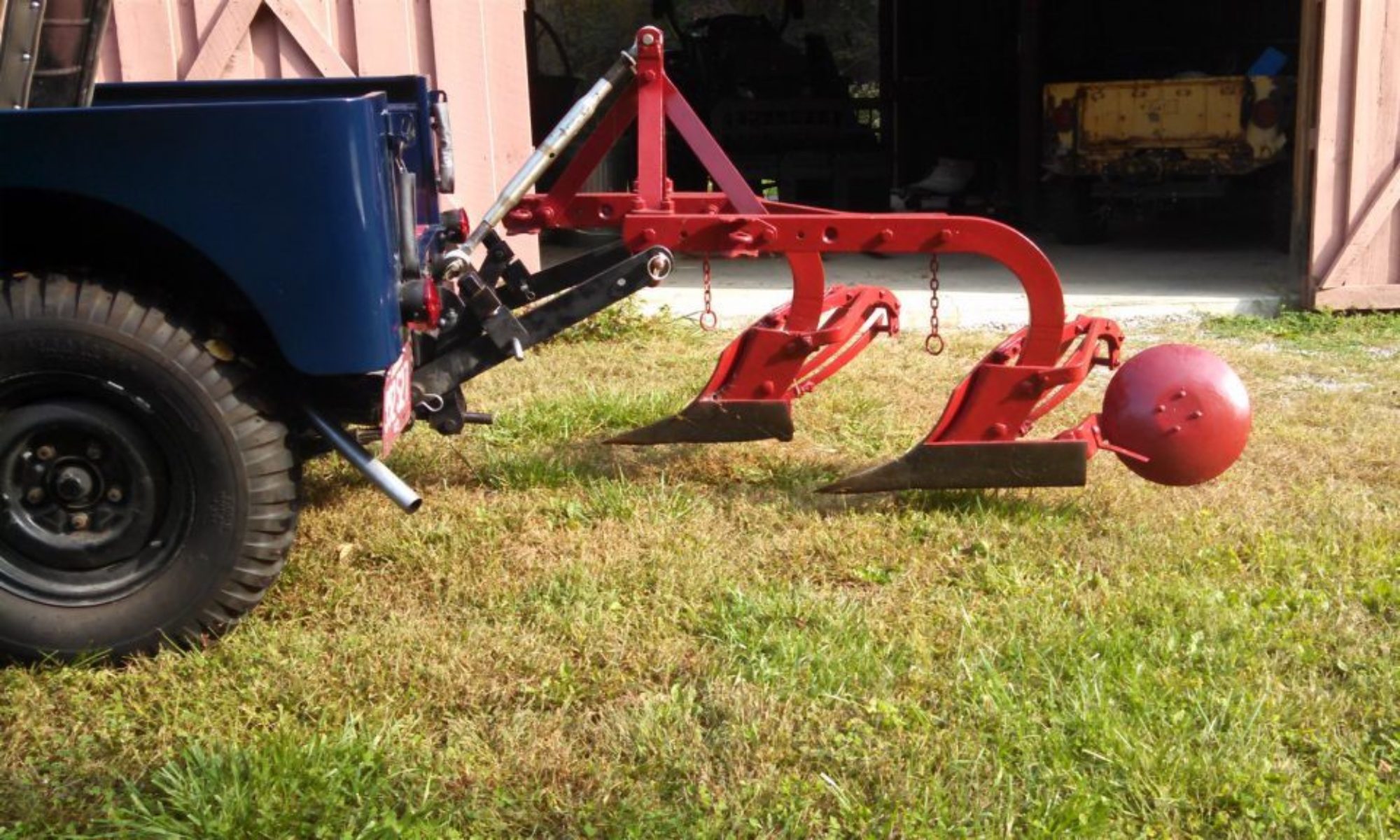

Clint Dixon has created a comparison of Monroe lift part numbers. The Monroe lift was in production for almost a decade and was used in multiple applications beyond the Farm Jeep.
Clint included the following information.
I used every source I have that is dedicated strictly to the Monroe Lift, that lists part numbers, and was published by either Monroe or Willys. I did not use Willys Jeep parts lists as most that I find do not show illustrations of the Lifts. The one exception is that I used the Jeep Forward Control FC-150 parts list as this is the only source I have found so far. I also regret that I have not been able to find Monroe parts list devoted to the Lifts targeted at the Le Roi Centaur Ag-48 and Ag-49 model tractors, the ATC Terratrac tractor, the Sheppard tractor, or the Dodge Power Wagon. I am confident that they used mostly the same parts but with a few unique exceptions. But since this comparison is devoted to the various Jeep models, expanding upon that may have been taking it too far at this point in time anyway.
I did not list all of the individual parts making up the subassemblies of the Monroe Kits, or even all of the parts or assemblies of the top level. I did not list or compare the top level part numbers assigned to the entire “kit”. Instead, I focused upon the most obvious parts and assemblies where I saw changes in part numbers between sources.
Some key takeaways from the comparison:
1) In most cases Willys assigned new part numbers rather than continuing with the same part numbers that Monroe had assigned. This was not a hard fast rule though. The most obvious cases of the rule being broken was in part numbers assigned to some hardware. This oddity can be expanded upon by takeaway #2 below:
2) Source #3 was the most confusing. Although it was a good source for a side-by-side cross reference comparison of Monroe and Willys part numbers, it contained some discrepancies as far as the Monroe numbers. There are some instances, found within, where the same part is listed in multiple places. For instance one can find some of the very same parts listed under both “serviceable components” as well as stand alone but with a different part number assigned in each place. It appears that this list may have been an update from an older earlier attempt at a list and that not every part number got updated in every instance where the part appeared when the new list was created.
3) I am aware of the first Universal Jeep units released for production. Those did not have nomenclature cast into the sides of the main housing. Instead, the sides were smooth and the Monroe nomenclature and serial number was stamped into a data tag riveted to the housing immediately above the upper link attachment point. I had assumed that this early housing was assigned a unique part number that changed then later on. None of my sources distinguish this early unit from the later ones.
4) In addition to the smooth sides of the main housing, the early units had unique crank handles for the leveling link assembly. The early handles were of uniform diameter all along their entire length – except for the knob at their end. The later handles tapered down in diameter the further out one measures towards the knob end where the operator would grip. Again, none of my sources distinguish this early unit from the later ones.
5) Images from 1947 show an assumed pre production prototype lift being tested on Jeeps. This lift is distinguished by apparently being constructed of welded together flat plate to form the main housing. This only appears as a casting only later on in Monroe and Willys images. None of my sources distinguish this apparent prototype housing from the later cast ones. It is assumed that an early welded housing, even though it may be considered a prototype would have had an assigned part number (especially if more than one was made) that would then have changed once the housings began being of cast construction.
6) In addition to the leveling link assembly, a non adjustable lift rod was required on the opposite side of the lift. It appears that the normal position for the leveling link assembly was on the driver’s side of the unit for Universal Jeeps. This would require a right side lift rod. However, there is mention in literature of the option to place the leveling link assembly on the passenger side which would require a left side lift rod. The other option mentioned would be to heat the standard right side lift rod and twist it in shape to better work on the left side. I did not include this
Information to avoid confusion.
7) From my single Monroe parts list source, as well as vintage photos, it appears that the leveling link assembly on units designed for the Jeep pickup truck were always located on the passenger side. This information in part numbers is shown in the comparison (Flag #10).
8) I can’t explain why photos and literature all show the Jeep truck and Power-Wagon leveling link assemblies mounted to the passenger side of the vehicle. I know that was an option on the Universal and I can see the benefit for some operators. On my truck I have it on the driver’s side as I don’t have to leave the cab and walk all the way around an implement to adjust the side-to-side tilt.
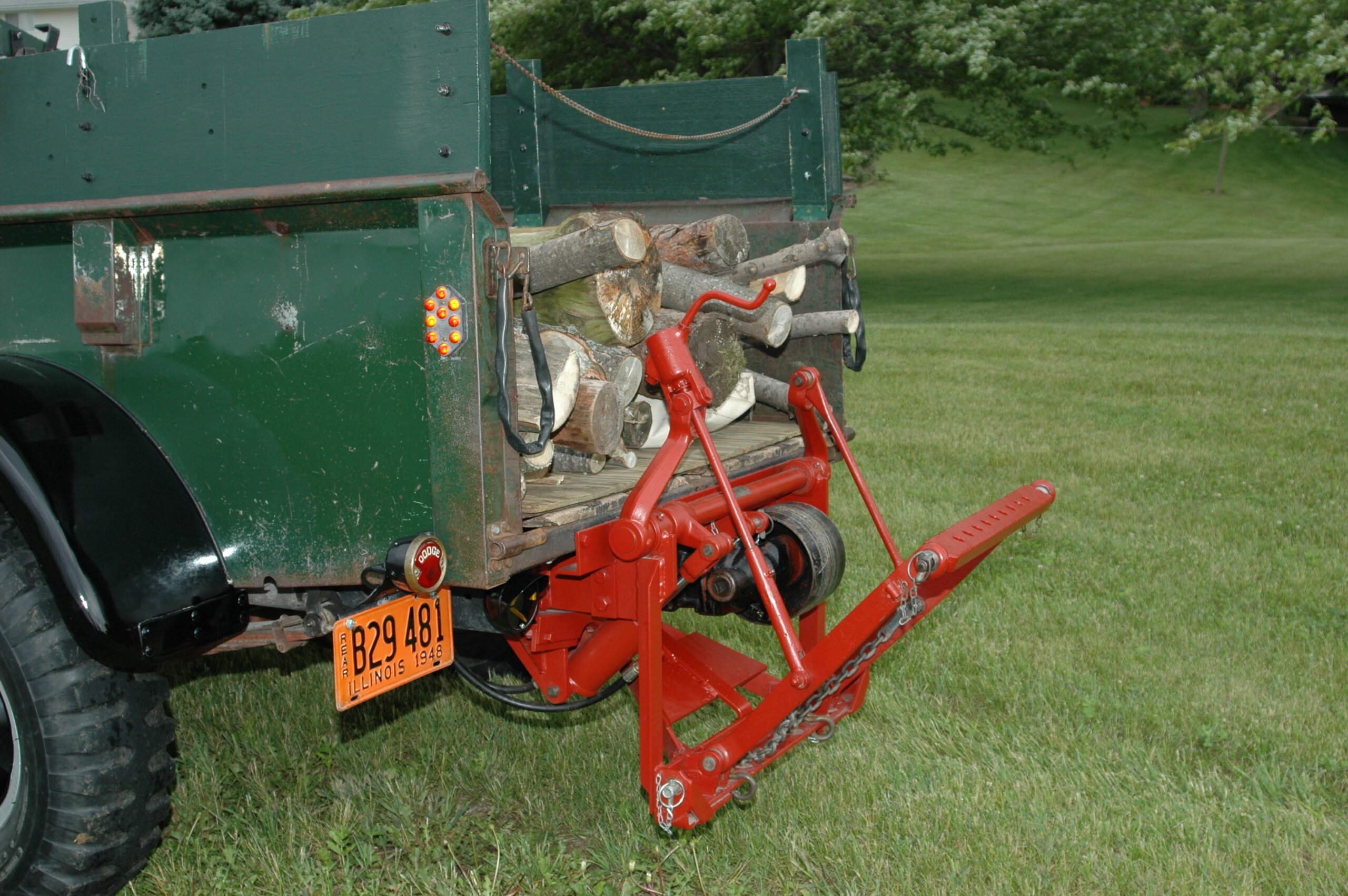
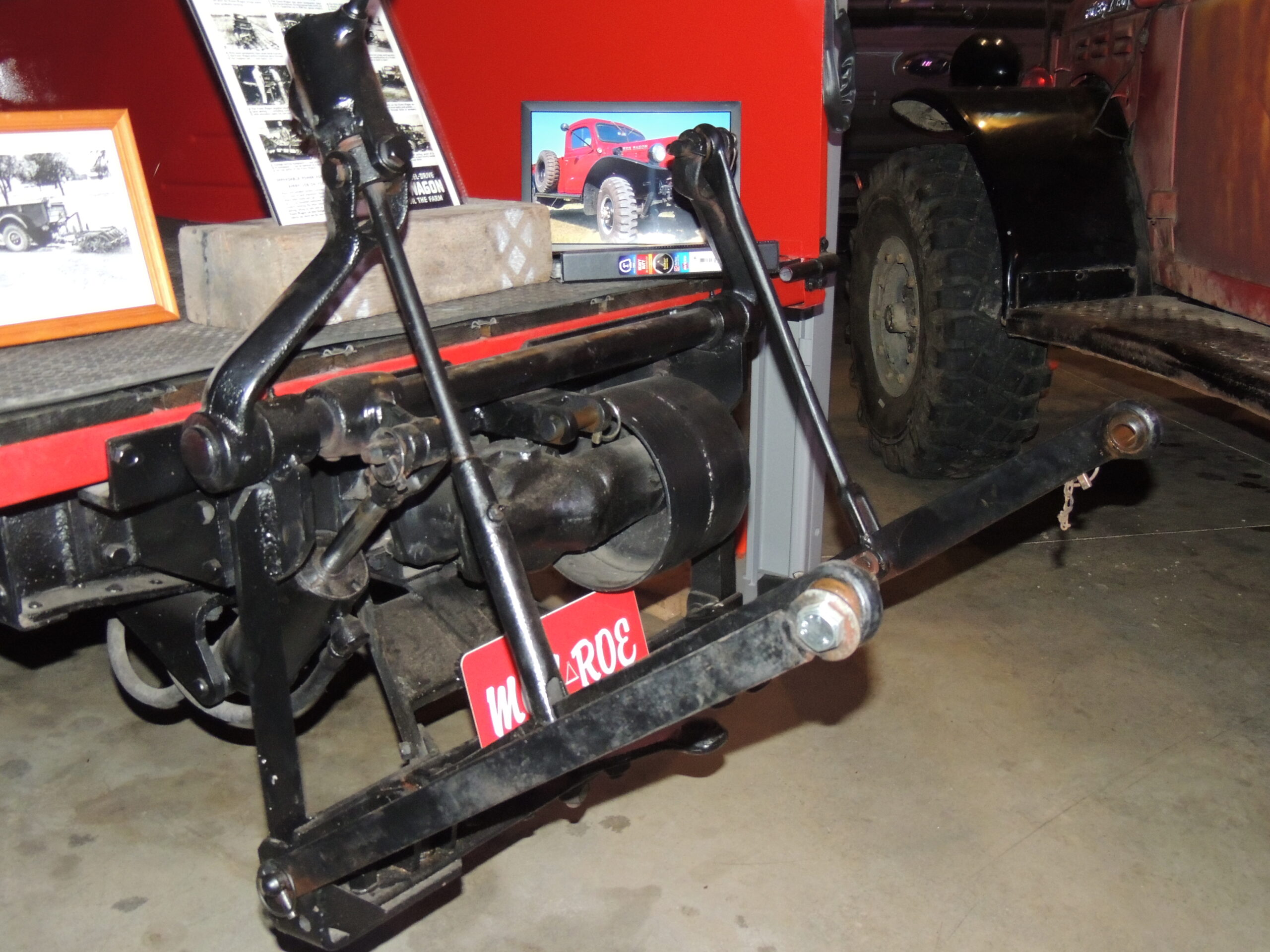
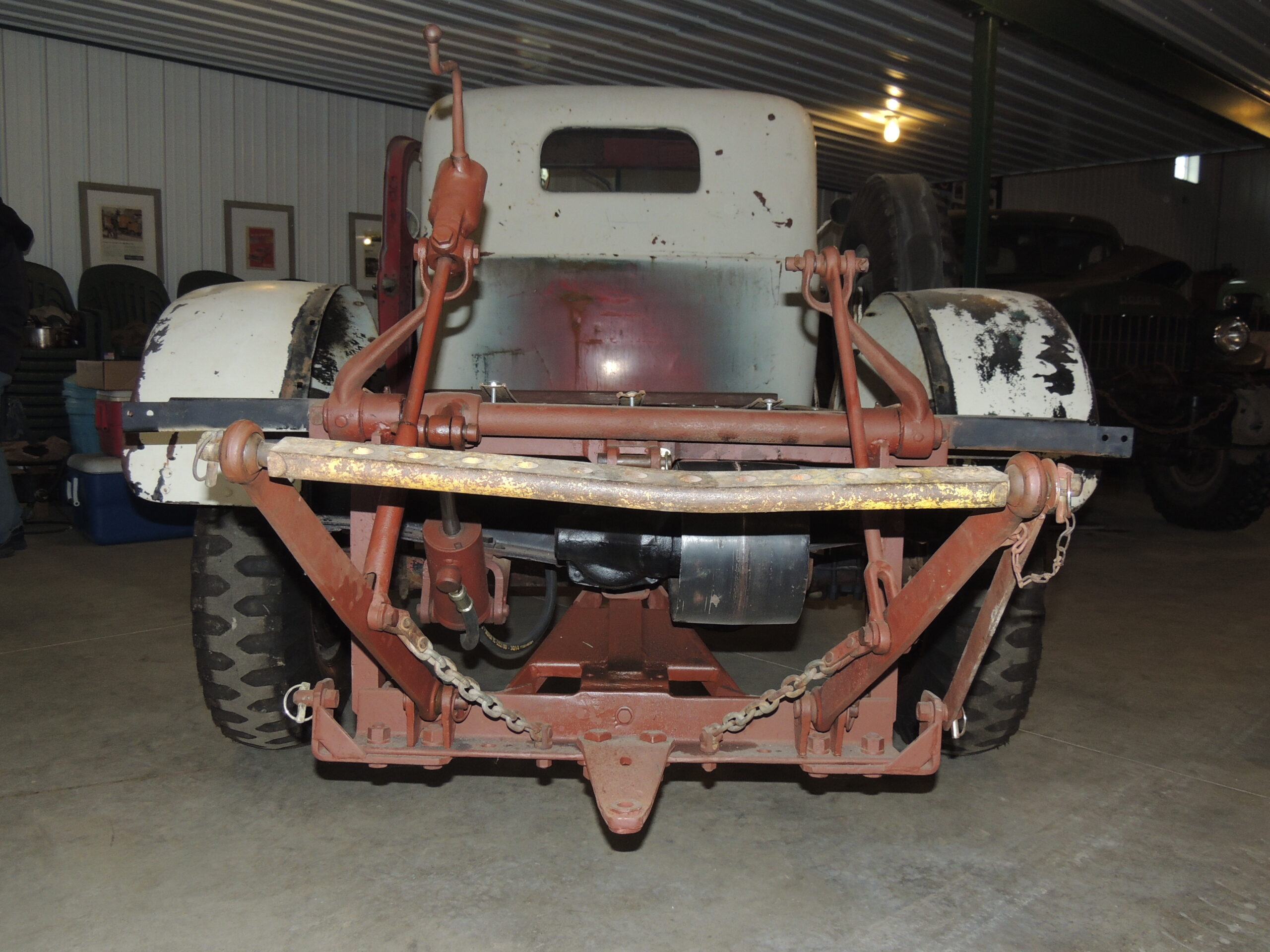
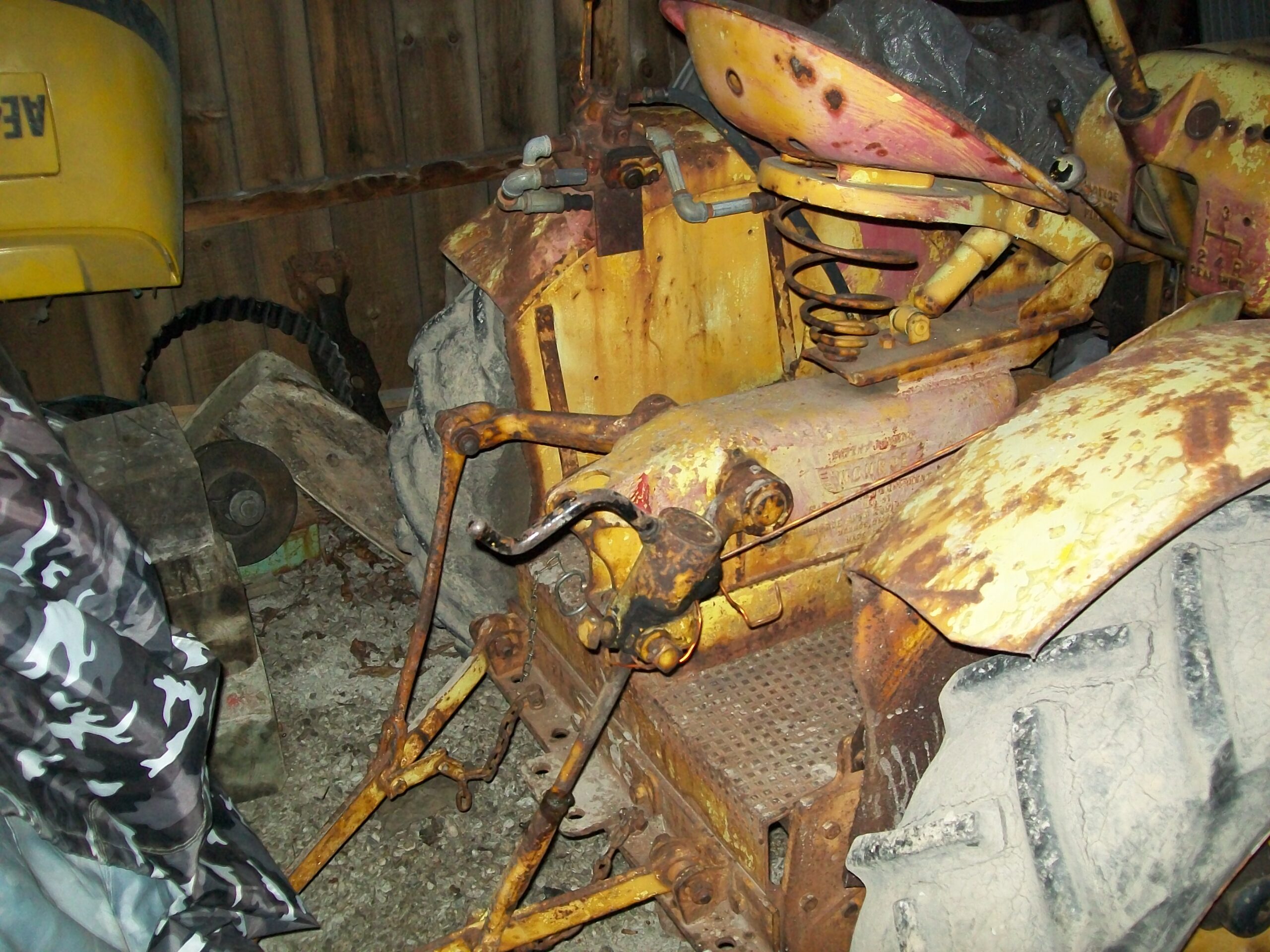
9) The leveling link assembly designed for the Jeep pickup truck had a short, non tapered, crank handle as it was impractical to make it long enough to reach to the cab of the truck. This information is shown in the comparison (Flag #48). It appears that this very same short handle was used in the leveling link assemblies designed for use on the Dodge Power-Wagon, the Le Roi Centaru Ag-48 and Ag-49 tractors, and one version of the Monroe lift used on the ATC Terratrac crawler tractor. (See attached where one tractor has the short handle leveling link as well as a long handle leveling link used in place of a top link.)
10) I was very surprised to find that this short crank handle was apparently NOT used on the lifts destined for install on the FC-150.
11) The lifts designed for the pickup trucks had another difference. This unique difference was found in the relationship of internal components contained within the protective housing. Most assemblies had a 135 degree angle between the external clevis arm and the internal rockshaft lever (not flagged in any images). On the pickup truck version this angularity was changed to 130 degrees. The presumption is that this had to be done to correct overall working geometry caused by the bed of the pickup being higher off of the ground than the bed of the Universal Jeep. (I wonder how many owners have installed a truck lift on their Universal and have always wondered why they could not lift implements as high as they should be able to?)
12) Another housing difference that I currently do not have enough part number data on to include in the list is that of the housing used on the Le Roi Centaur tractors. These had a mounting plate welded on the top surface of the housing to which was mounted the Monroe tractor seat. Also, they used a riser plate under the housing to apparently raise the housing up to a level closer to that of the Universal Jeep. I have seen at least one of these special housings sell on ebay with no indication of the seller realizing what exactly they had.
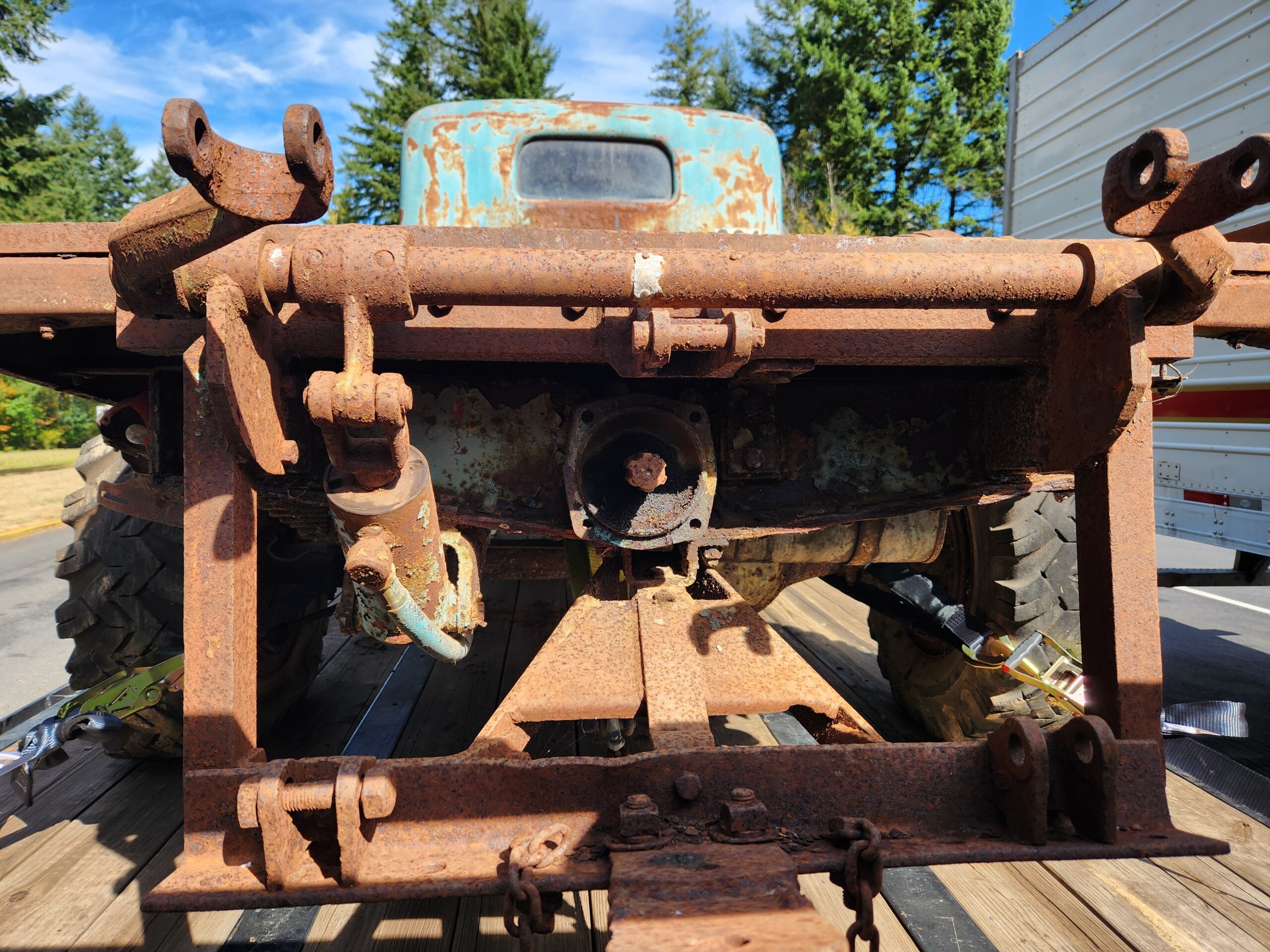
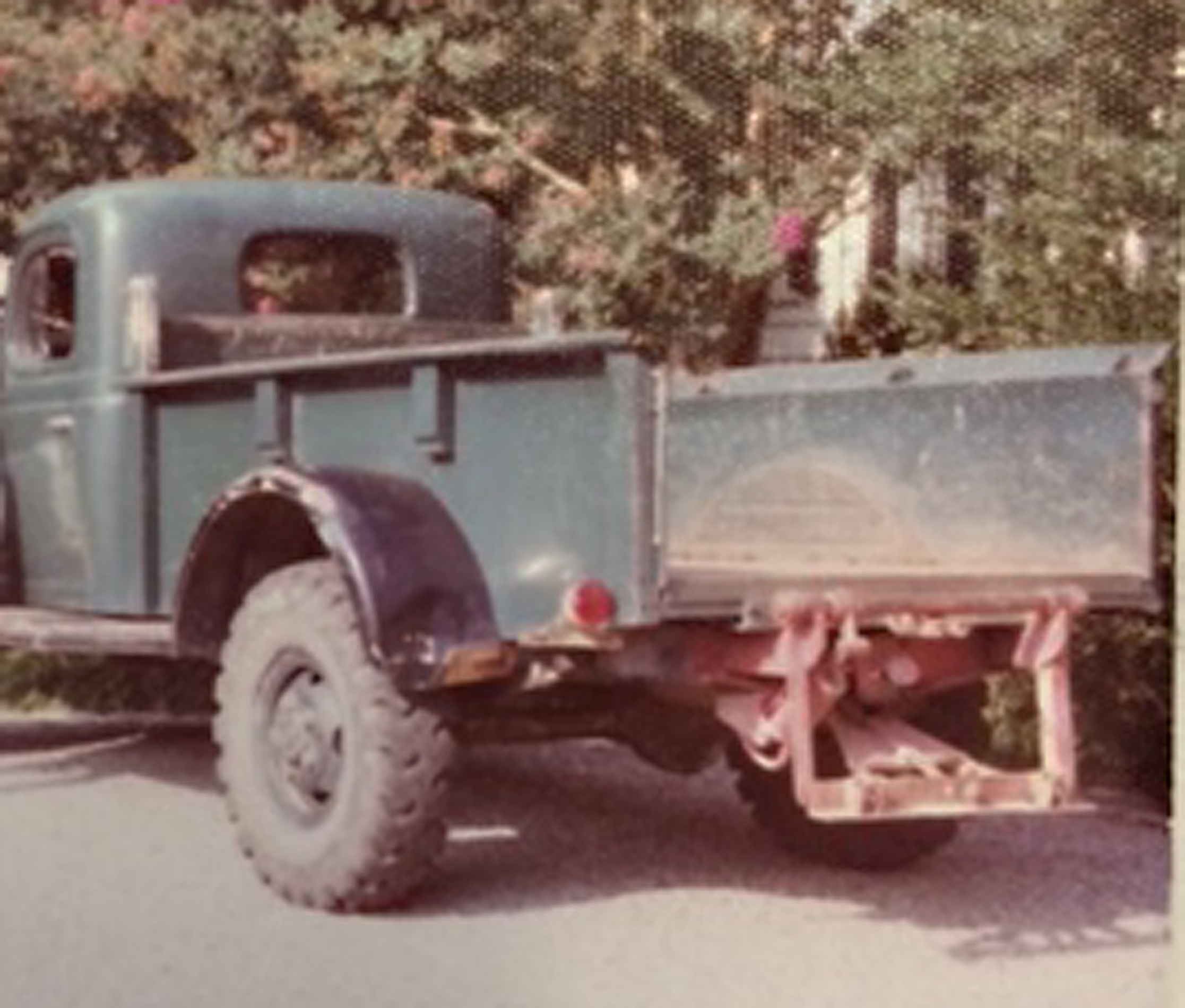
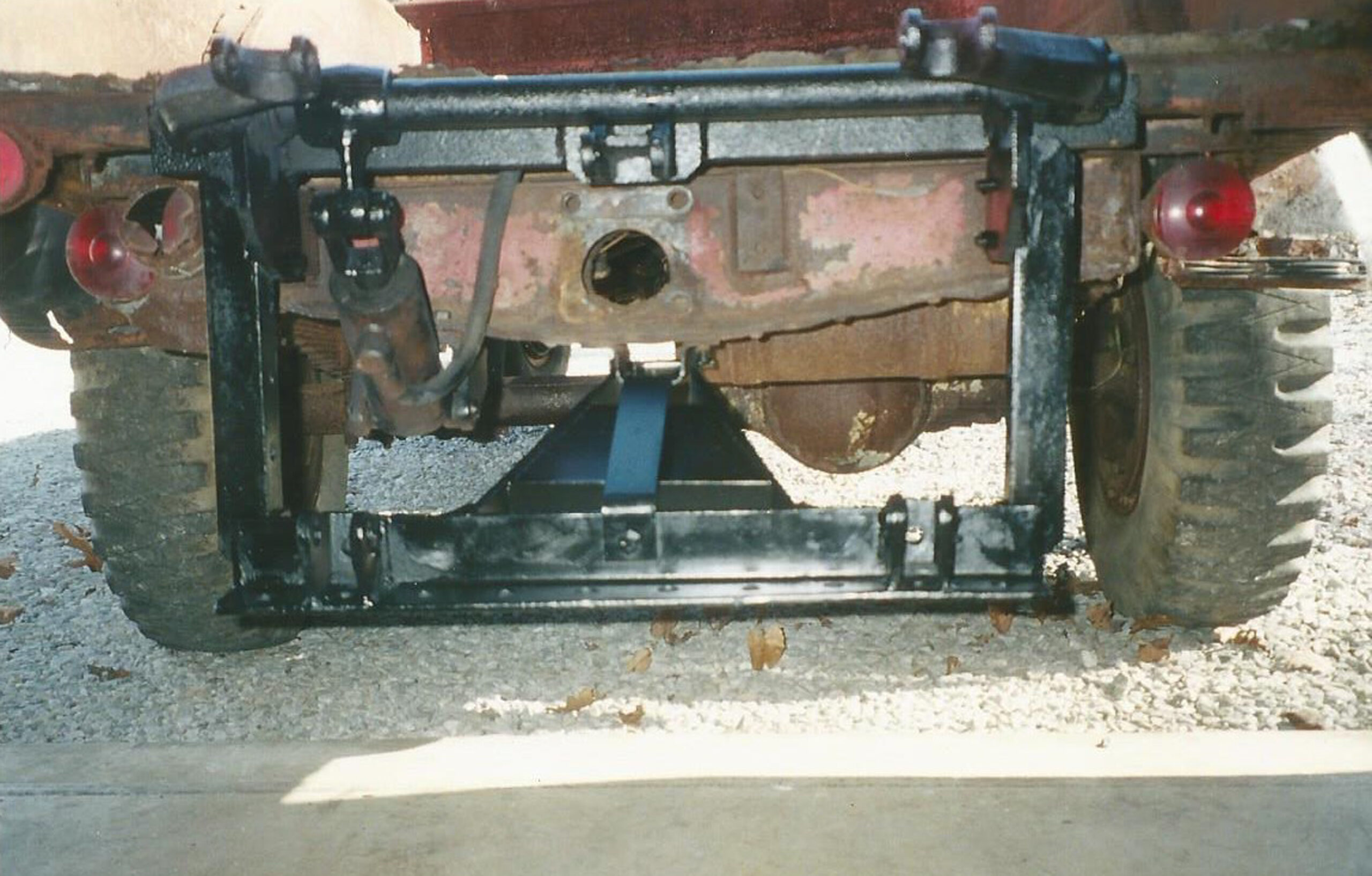
13) Probably the most significant difference, indicated by the images and part numbers, was in the mounting of the housings to the trucks versus the Universal Jeeps. The trucks use a substantially more robust mounting and bracing substructure.
14) I believe that the major differences between the drawbar kits listed for the Jeeps was that the Universals were the only ones that required a profile cutout in the vertical leg of the angle in order to make room for mounting the PTO box. Why the FC-150 drawbar kit was assigned a completely different part number from either the Universal or the truck, I cannot explain.
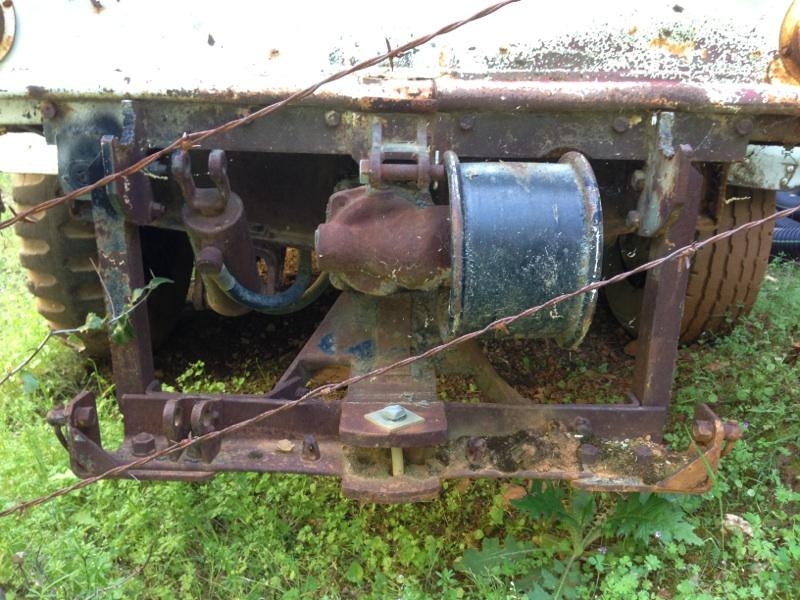
Below are images of Monroe lifts installed on Power-Wagons and other tractors.