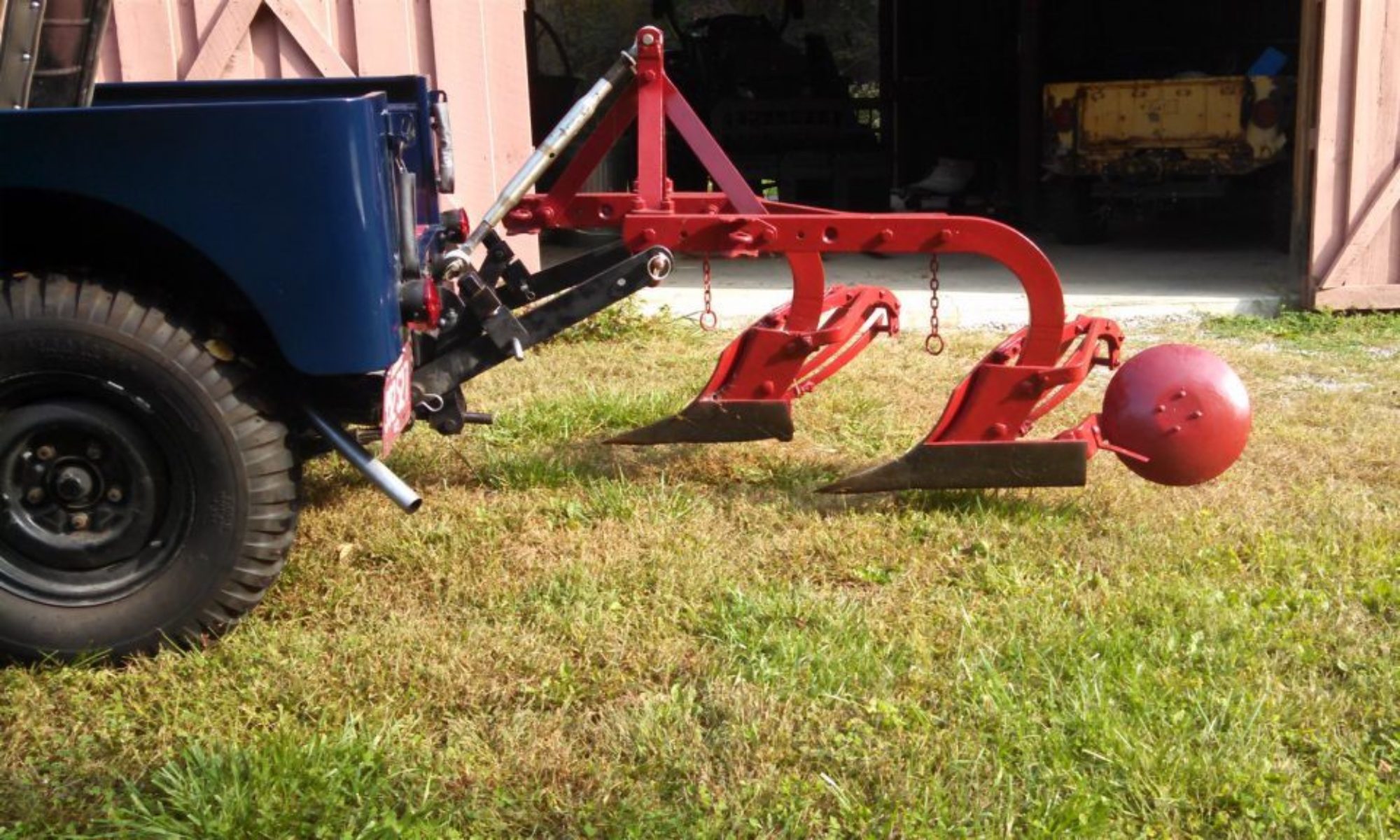

A Military Background for a Civilian Jeep
Godlove 1948 Willys Model CJ-2A — VIN 197198 of 224,764
Introduction
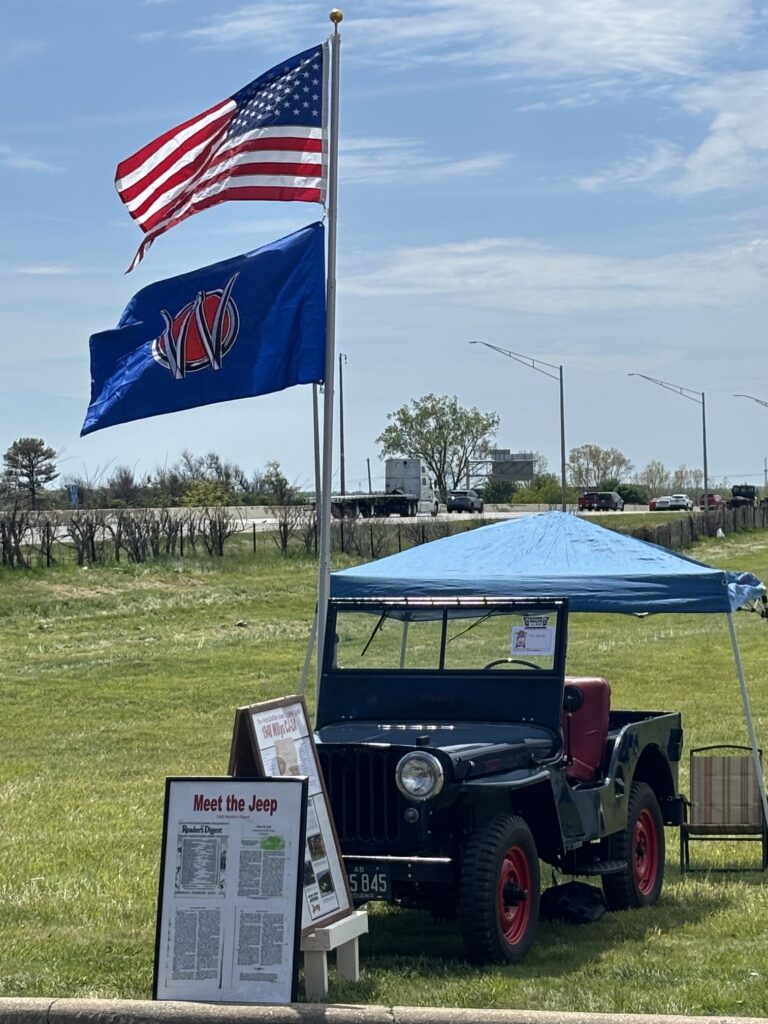
Nothing gets our attention quicker than an attractive and informative Jeep display. When we saw this one at the Spring Willys Reunion, we knew that this was a Jeep story we wanted to share. Thanks to Mike Godlove for sharing his family’s Jeep
The Godlove Jeep Story
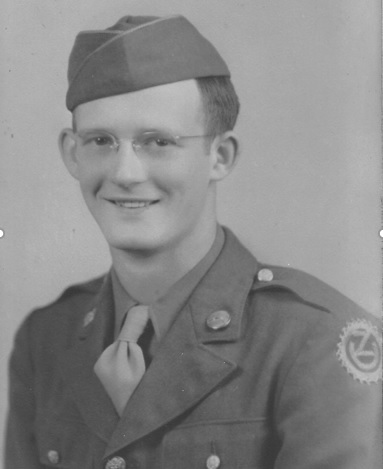
Charles Edwin (Ed) Godlove enlisted in the Army in 1943, but before his papers were signed his new wife Virginia (Jiggs) got sick and he returned home. Subsequently he was drafted and was sent to Paris, Texas for basic training. We expect that is when he fell in love with Jeeps. He was discharged for health reasons in 1944.
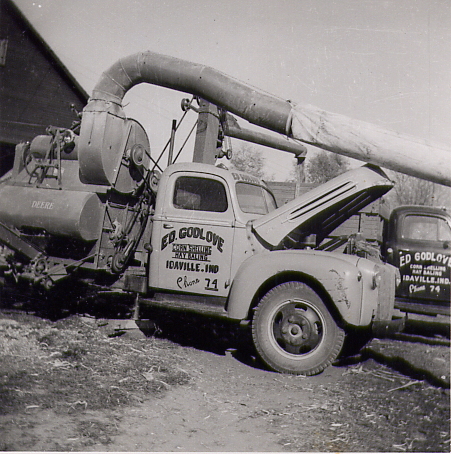
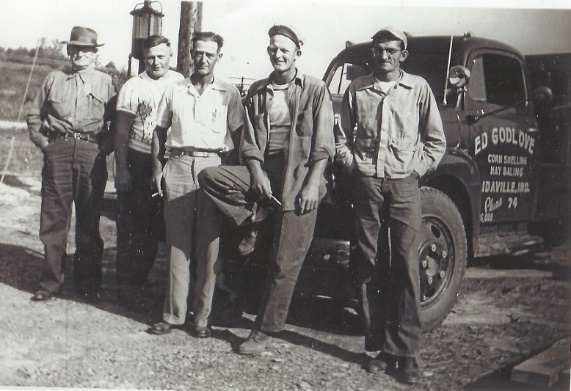
He returned home and worked at a cement block plant, then farmed for a couple of years. After attempting to farm, Ed decided to provide services to local farmers. He purchased and ran a John Deere corn sheller, trucks to haul grain for local farmers, and a baler. The signage on the side of his truck doors read, “Ed Godlove, Idaville, IN, Corn Shelling, Hay Bailing, Ph 74.”
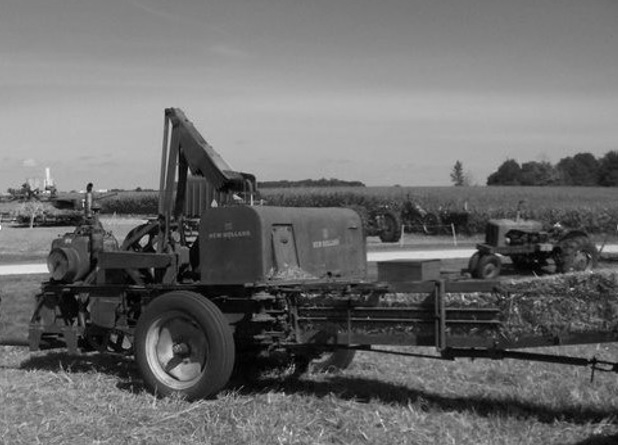
Ed purchased the Godlove Jeep new in 1948. The Jeep doubled as the family “car” as well as an agricultural vehicle to pull the baler. With it, Ed pulled a New Holland 77 baler, like the one above, which had its own Wisconsin engine for power. Shortly after he purchased the Jeep, to impress Jiggs with its capabilities, he took her for a ride and promptly got the Jeep stuck, teetering on top of a log. Ed and Jiggs had two children, Gary Godlove, born in 1945, and Michael (Mike) Godlove, born in 1949. At the time Mike was born, the Jeep was the family car.
Ed died of kidney disease in April of 1951 at the age of 28, leaving Jiggs a widow with no job and two small children. Her brother, Harold (Bunk) Brooks, ran the Jeep baling business for her during the following year after Ed passed. For the baling season that year, Ed had ordered a lot of twine, which was delivered just after he died. During the season there was a twine shortage, and Jiggs had people call her to see if she would sell them twine. Even though she did not know if she had extra or not, she held on to what Ed had ordered, and they used all of the twine just as the season finished. Jiggs felt that it was God’s provision.
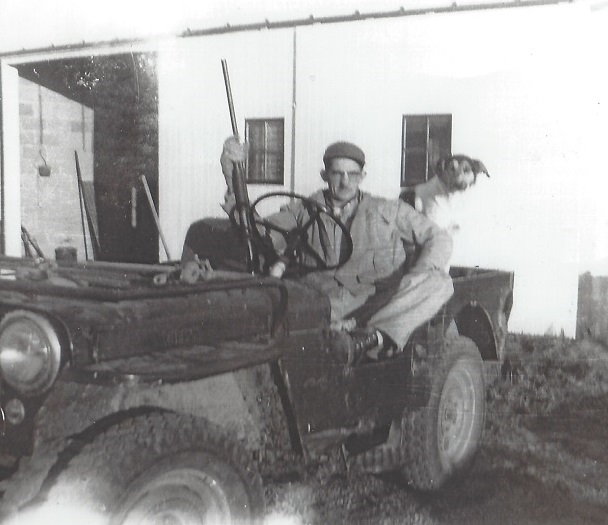
The hay baling business, the Jeep, and the New Holland hay baler were sold to longtime family friend Francis (Francie) Marvin. We believe the image above is the earliest image of the Jeep. Francie used the Jeep as a farm vehicle and to pull the baler as a business into the 1960s before selling the Jeep to Gary Underhill from Delphi, IN. We believe it was used on Gary’s farm as a general-purpose vehicle.
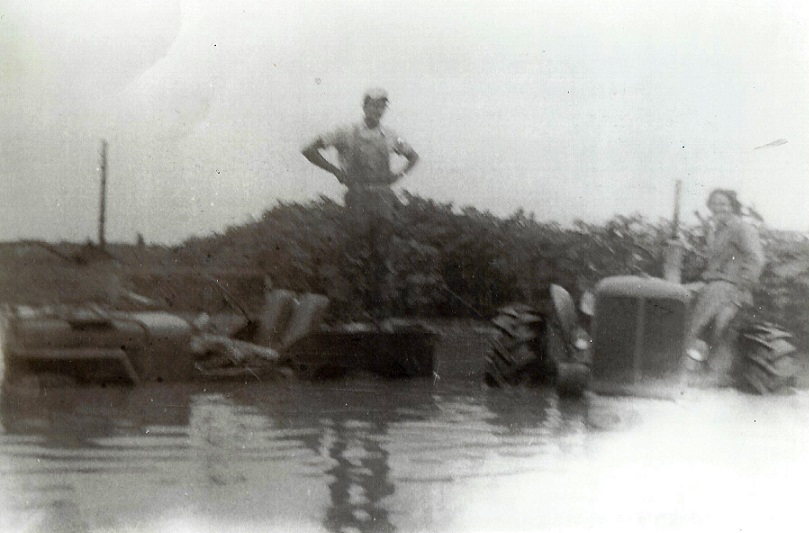
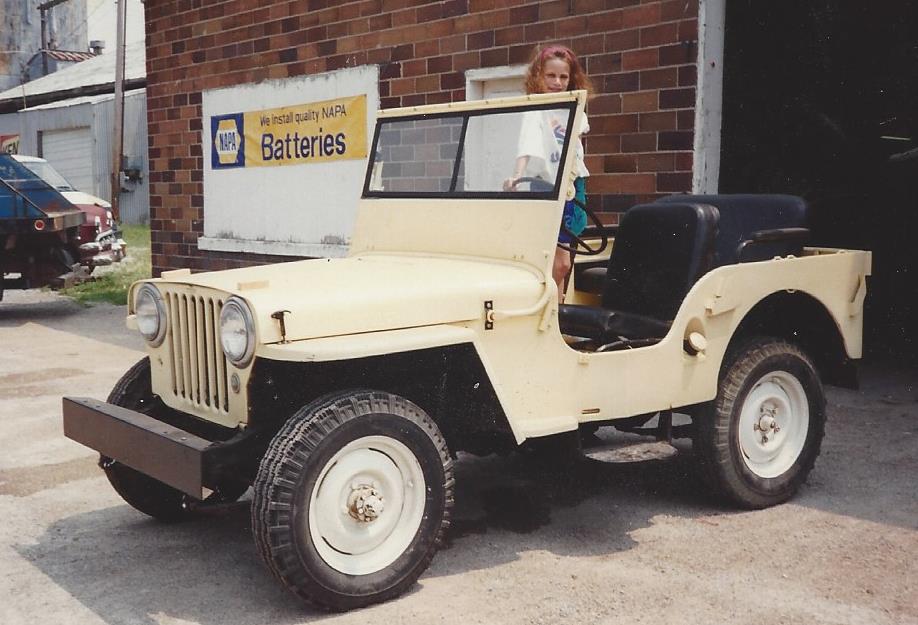
In about 1986, Perry Godlove, Ed’s youngest brother, was doing some work for Gary Underhill when he saw a Jeep. The discussion came around to the fact that Underhill had purchased the Jeep from Francie Marvin. Perry notified Gary Godlove, Ed’s son, that he had found Ed’s Jeep. Gary Godlove contacted Gary Underhill, who declined to sell it back to the family at that time. However, a couple of years later he offered it back to the family, and Gary bought it for $1,500. At the time the Jeep was cream colored and had 28,000+ miles on it. It is pictured below.
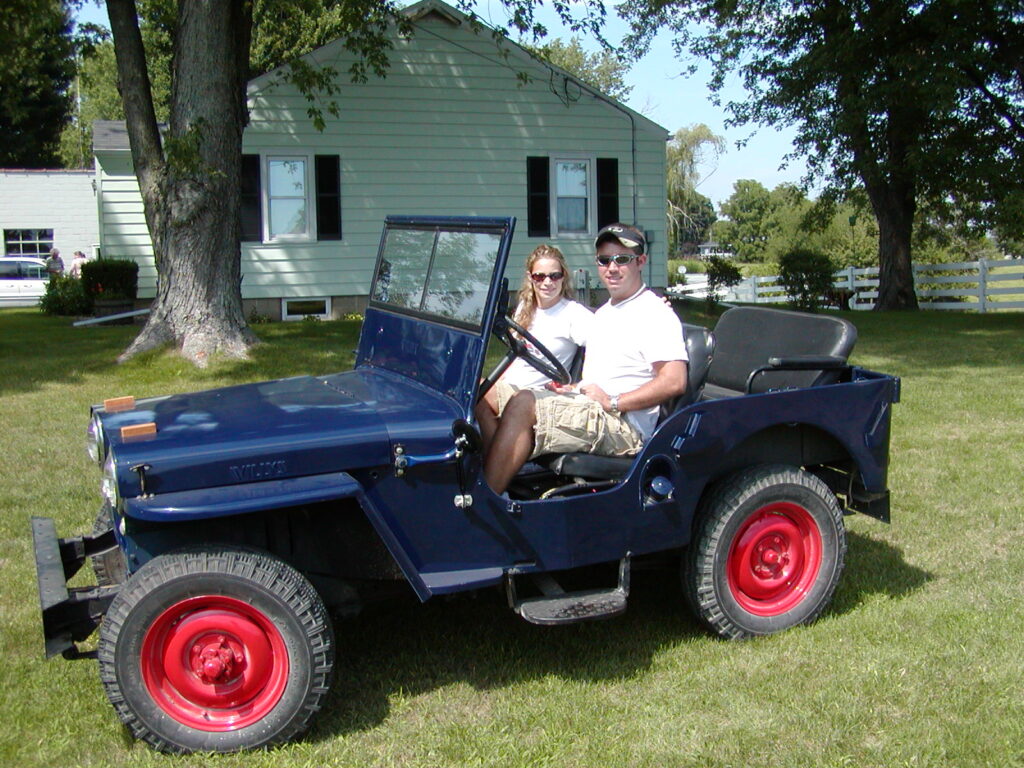
In 2007, Gary gave the Jeep to his brother, Mike. Mike, who worked in Monticello, IN, had driven the Jeep to work one Saturday. That day a co-worker from the company’s office in Dassel, MN, was in town. As Mike shared the story of the family Jeep with him, the co-worker mentioned that NorthStar Willys, a company that specialized in Jeep restorations, was at that time in Dassel, MN, population 1,012. Mike contacted them and contracted NorthStar Willys to do a frame-off restoration. The Jeep was in Dassel for about 10 months and was returned to the Godlove family on July 1, 2008.
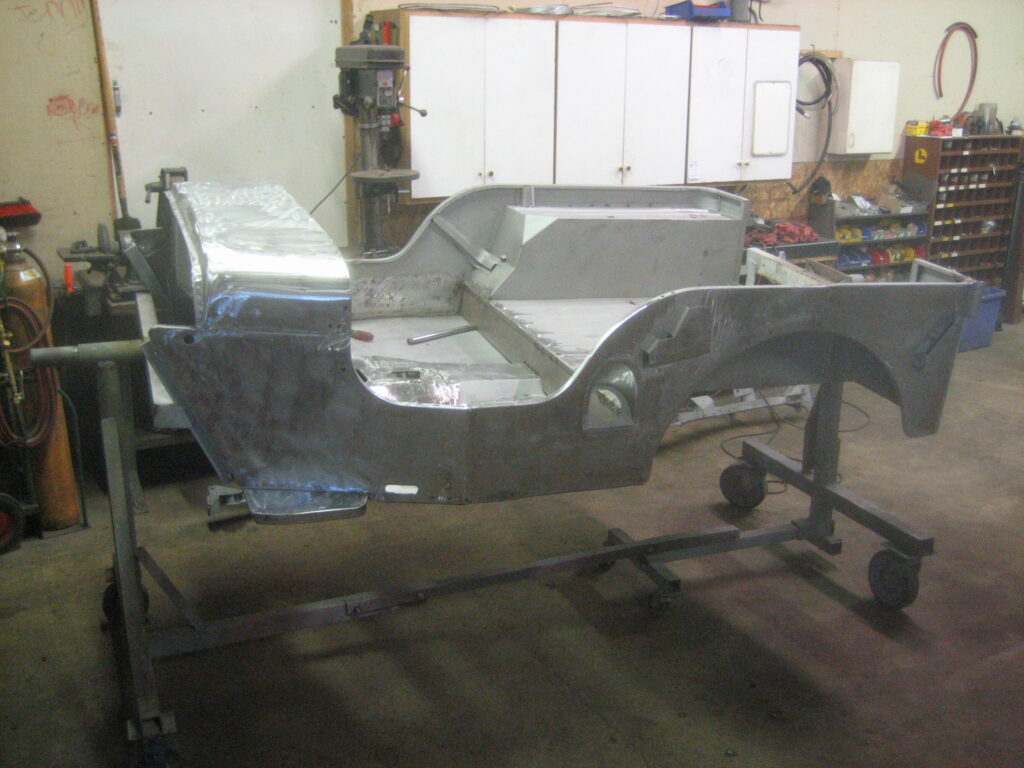
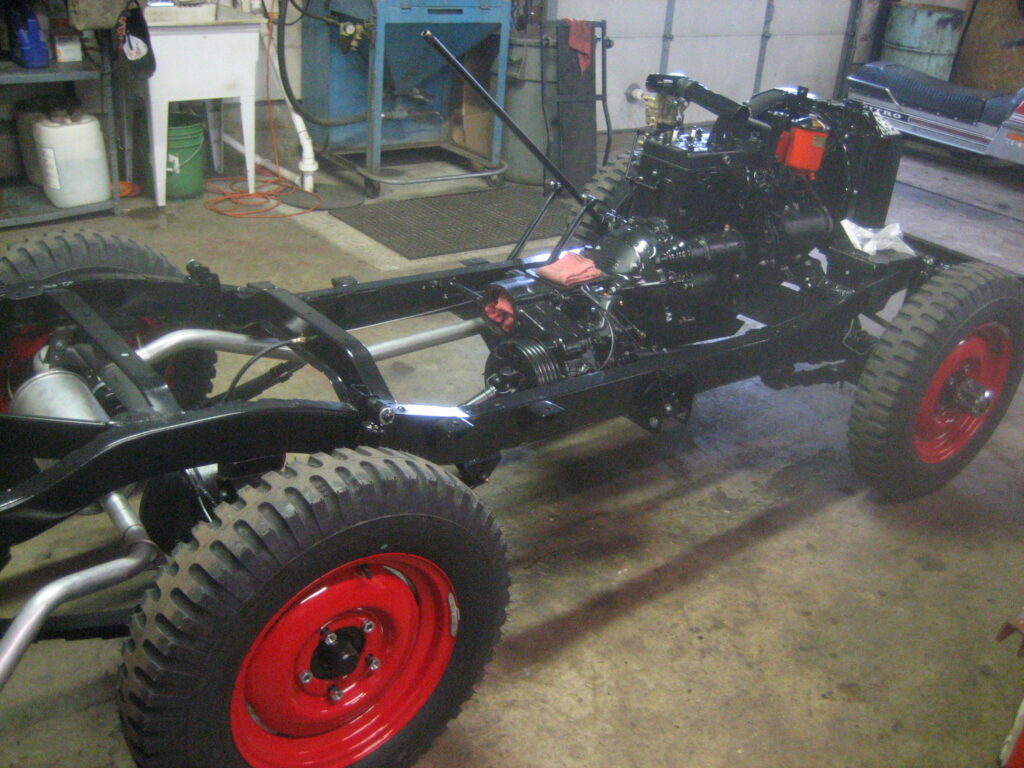
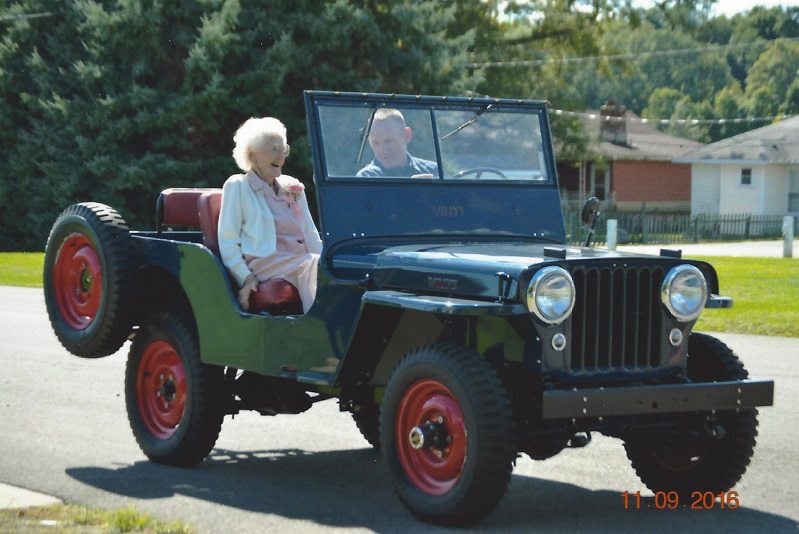
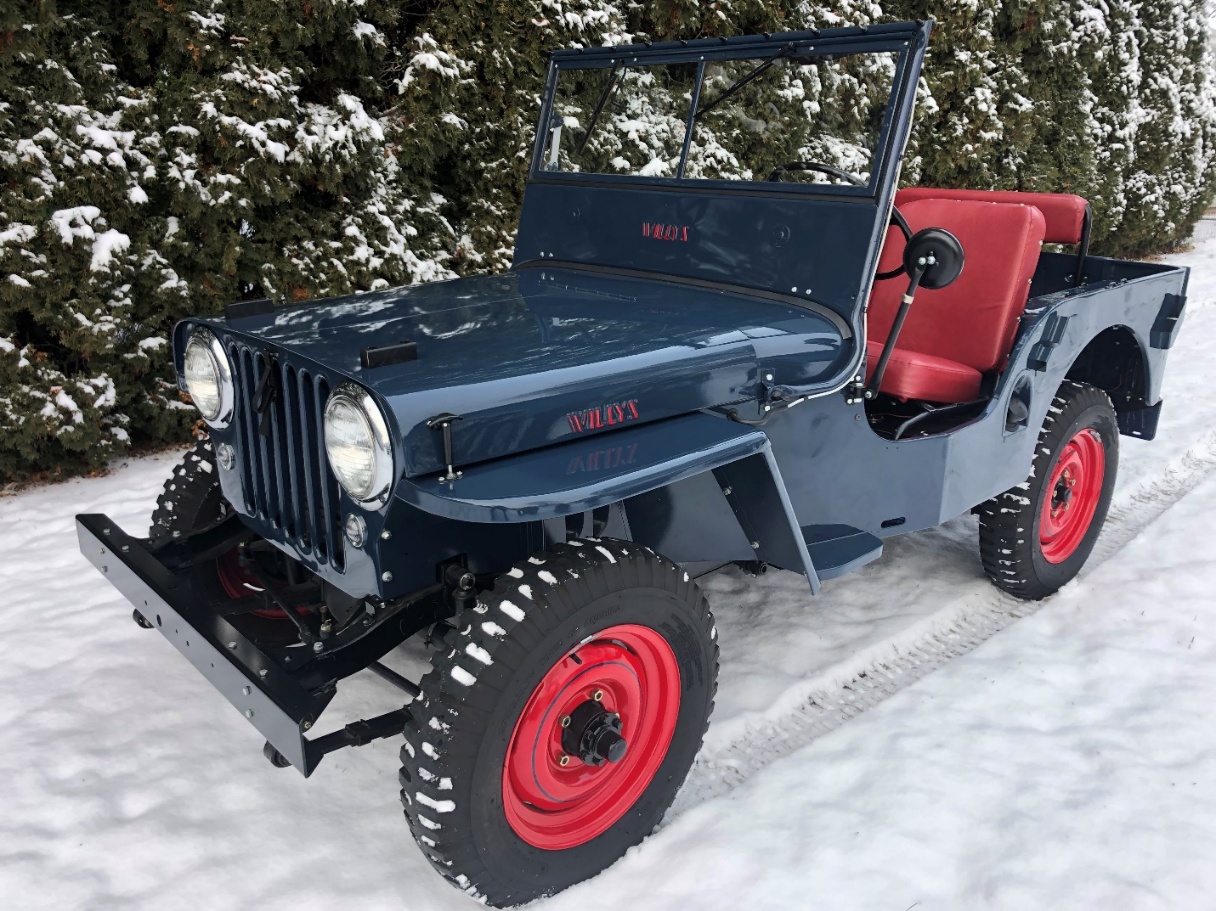
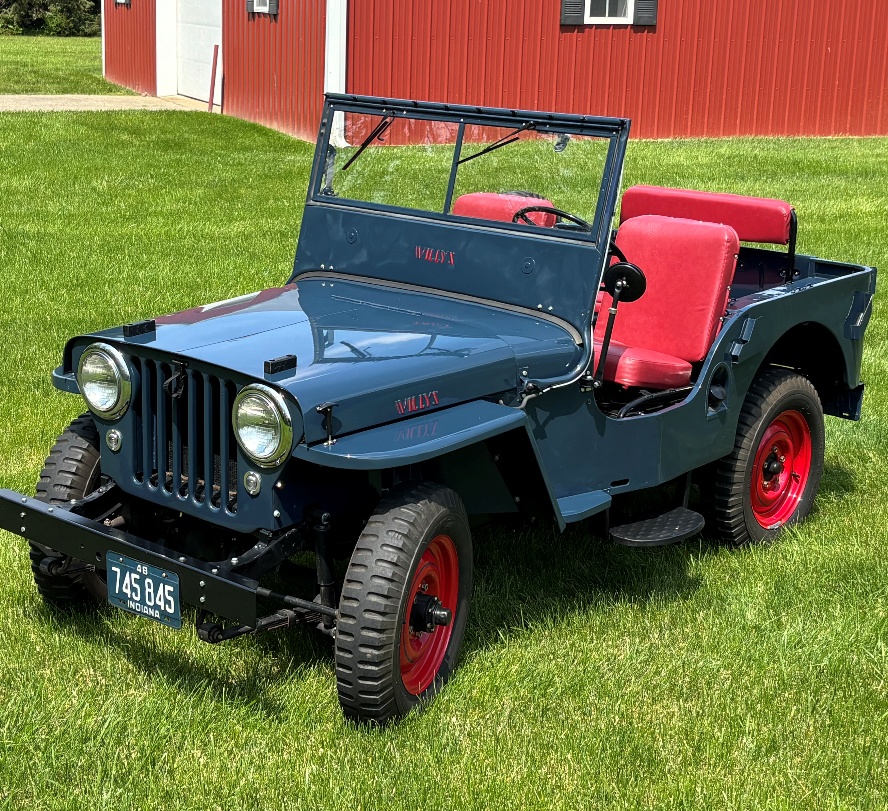
When the Godlove Jeep was purchased new, it had a top that covered the front two seats, canvas side doors (making it look more like a pickup), and side steps. At some point it stopped being used as the family car, and the top and doors were lost. At the time of the restoration, the mileage on the still-operational odometer was just over 28,000 miles. It was replaced during the restoration, and when the Jeep was returned to the Godloves it had 60 miles on it. It is believed that the seats were not originally red, but it is understood that was an option at the time.
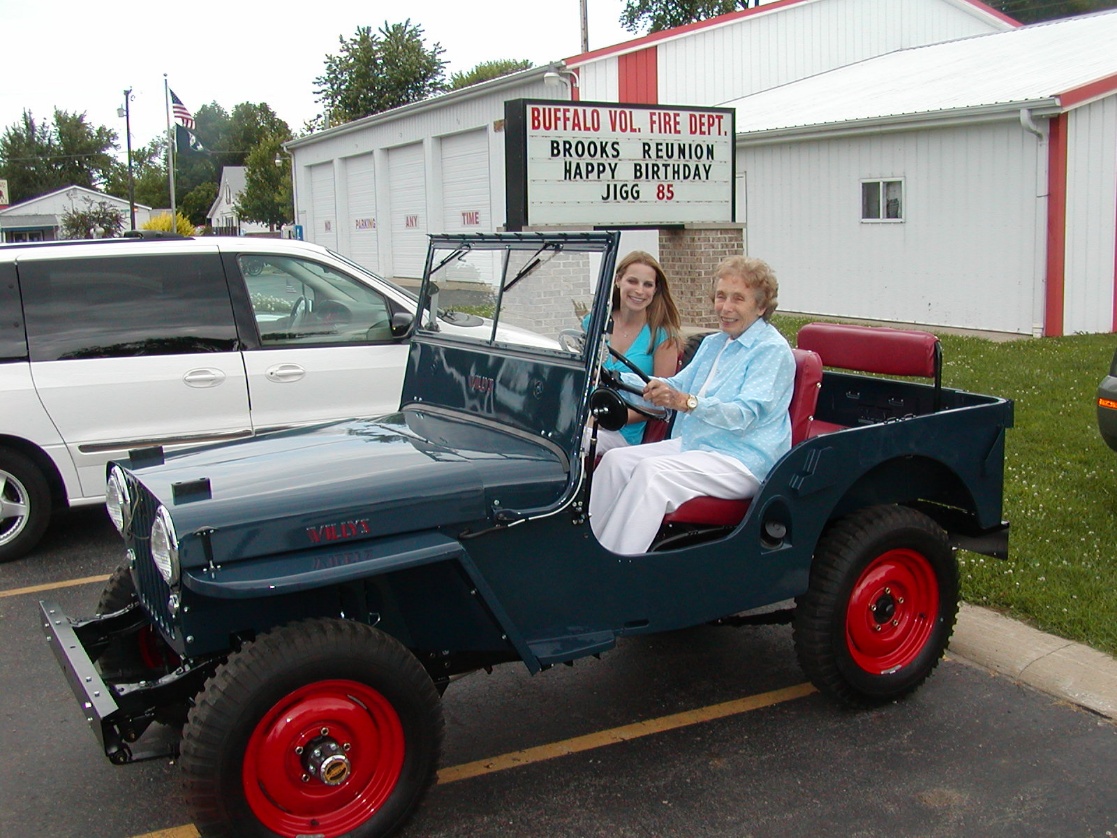
Jiggs, or “Grandma Jigg,” as her two grandchildren Libby Godlove and Robison Godlove called her, loved to take her grandchildren out for rides in the Godlove family Jeep. She passed in 2012, just short of her 89th birthday.
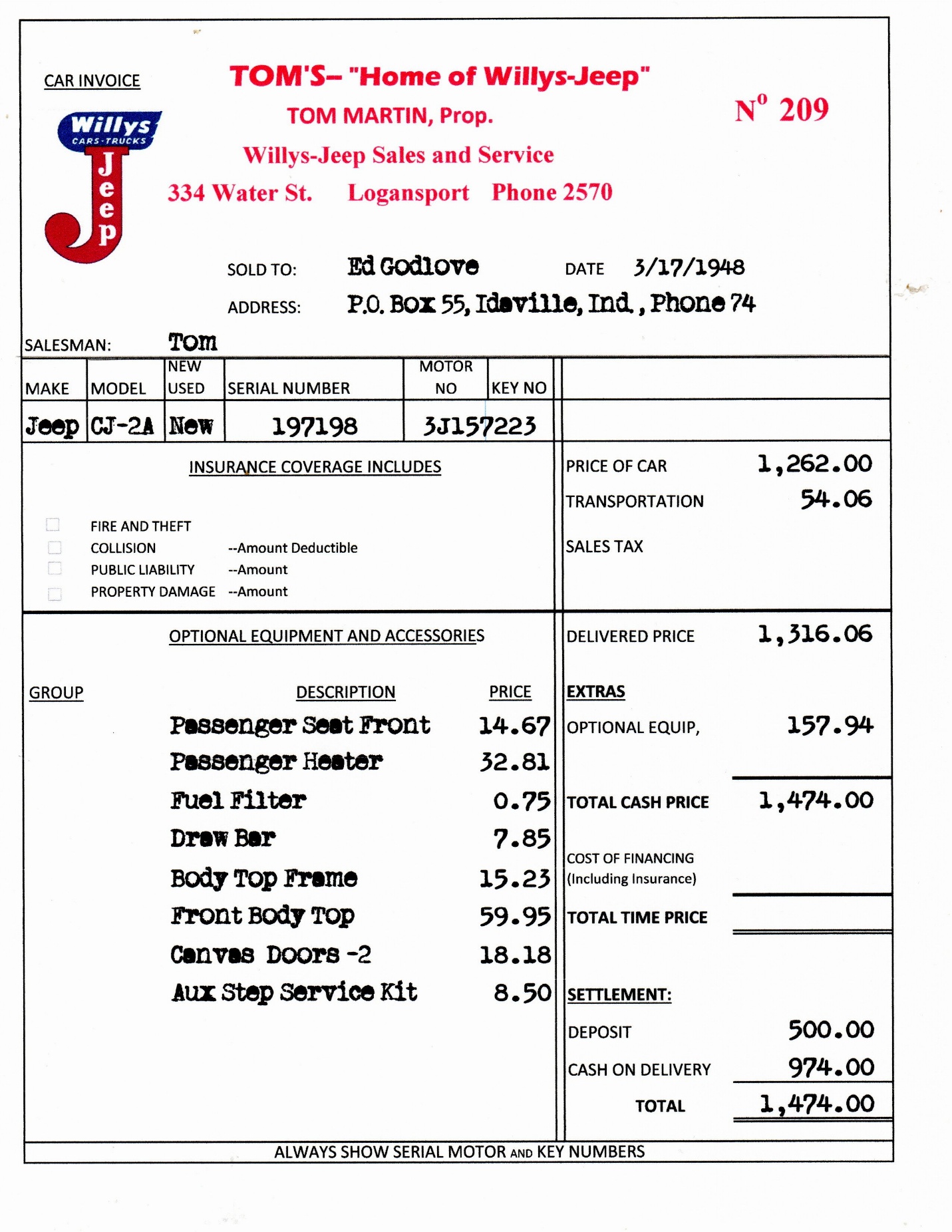
Gary remembers that his dad likely purchased the Jeep in Logansport, IN. Research revealed there was a Willys-Jeep dealer in Logansport at that time, TOM’S. Below is a recreation of Ed’s invoice.
The Birth of the Jeep
As the war in Europe spread in the late ‘30s, the U.S. Military wanted a new lightweight, four-wheel-drive reconnaissance vehicle. They solicited bids for a command/reconnaissance car with an 80″ wheelbase weighing 1,300 lbs. in June of 1940. Three companies responded: Bantam, Ford, and Willys. The Bantam Car Company had the leading contender based on overall design, but Willys had the wonderful “Go Devil” flat-head four-cylinder engine. Ford had some good ideas too, and there was a pooling of ideas that surely violated the spirit, if not the letter, of intellectual property, trademark, and other laws, but served the government’s needs.
The final winner, after a few re-submittals, was the GPW — “G” for government, “P” for the 80-inch wheelbase designation, and “W” for Willys. “G” was used by Ford to differentiate vehicles produced for the government from those for civilian use (A = passenger car, B = bus, C = commercial vehicle, etc.), and letters at Ford differentiated models by horsepower rating, wheelbase, and so on; “P” happened to land at the “80-inch” spot, which is the wheelbase of a Jeep. One story has it that the lowly, uninformed GIs thought “GP” stood for “general purpose” and pronounced it “jeep.”
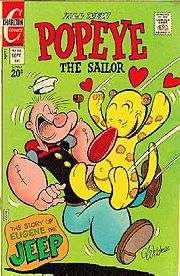
Other people say the word “jeep” was slang for any wonderfully multi-purpose thing. The Popeye cartoon had a character named Eugene the Jeep in 1936, who had all kinds of amazing powers.
The government selected a vehicle based mostly on the design by the Bantam Car Company. Bantam didn’t have the mass production facilities needed to supply the government, and the military wanted multiple suppliers. Willys got a contract to build “jeeps” in late 1940; Ford was awarded a contract a week later. Many parts were interchangeable between the Willys and Ford jeeps. Of the roughly half million jeeps produced for WWII, Willys-Overland made about 360,000 between 1941 and 1945. The jeeps proved rugged and dependable in the war, and by the time soldiers came home, jeeps were well known and loved for their durability and unstoppability.
The first civilian Jeep vehicle, the CJ-2A, was produced in 1945.
Willys advertisements marketed the Jeep as a work vehicle for farmers and construction workers. It came with a tailgate, side-mounted spare tire, larger headlights, an external fuel cap, and many more items that its military predecessors did not include. The CJ-2A was produced for four years, and in 1948 the CJ-3A was introduced. It was very similar to the previous model but featured a one-piece windscreen and retained the original L-head 4-cylinder engine.
| Manufacturer | Willys-Overland |
| Model | CJ-2A |
| Godlove Jeep Serial Number | 197198 |
| Total Production | 214,760 between 1945 & 1949 |
| Engine | L4-134 Go Devil — 134.2 cubic inches (2.2 liter), 60 horsepower @ 4,000 rpm |
1948 Paint Colors
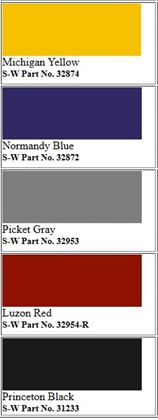
Normandy Blue 2As came with 2 different wheel colors — Autumn Yellow with a Normandy Blue or American Black stripe, and Sunset Red with a Normandy Blue or American Black stripe.