
The following information is from a document given to us by Jerry Wittkop. We have included the opening line from the longer history and the information regarding Bantam and Newgren. Given that the author (one of the principals of Monroe at the time) was involved, we believe this is an accurate representation of how the McIntyres viewed the Bantam relationship.
THE MONROE STORY
This is a very short history of The Monroe Auto Equipment Company, which was authored by William D. McIntyre, Jr. and published on November 24, 1994.
In 1948, Monroe acquired the American Bantam Company of Butler, Pennsylvania. American Bantam, which at one time had produced a small car, was involved in producing trailers for Lustron Homes of Columbus, manufacturers of prefabricated homes. But the trailer business was not a profitable one. Monroe’s management, used to producing 50,000 shocks a day, was unable to transfer its successful marketing methods to a company that manufactured only three or four trailers a day.
And Monroe never was paid for some of the trailers it manufactured for Lustron Homes, which used them to haul their prefabricated homes.
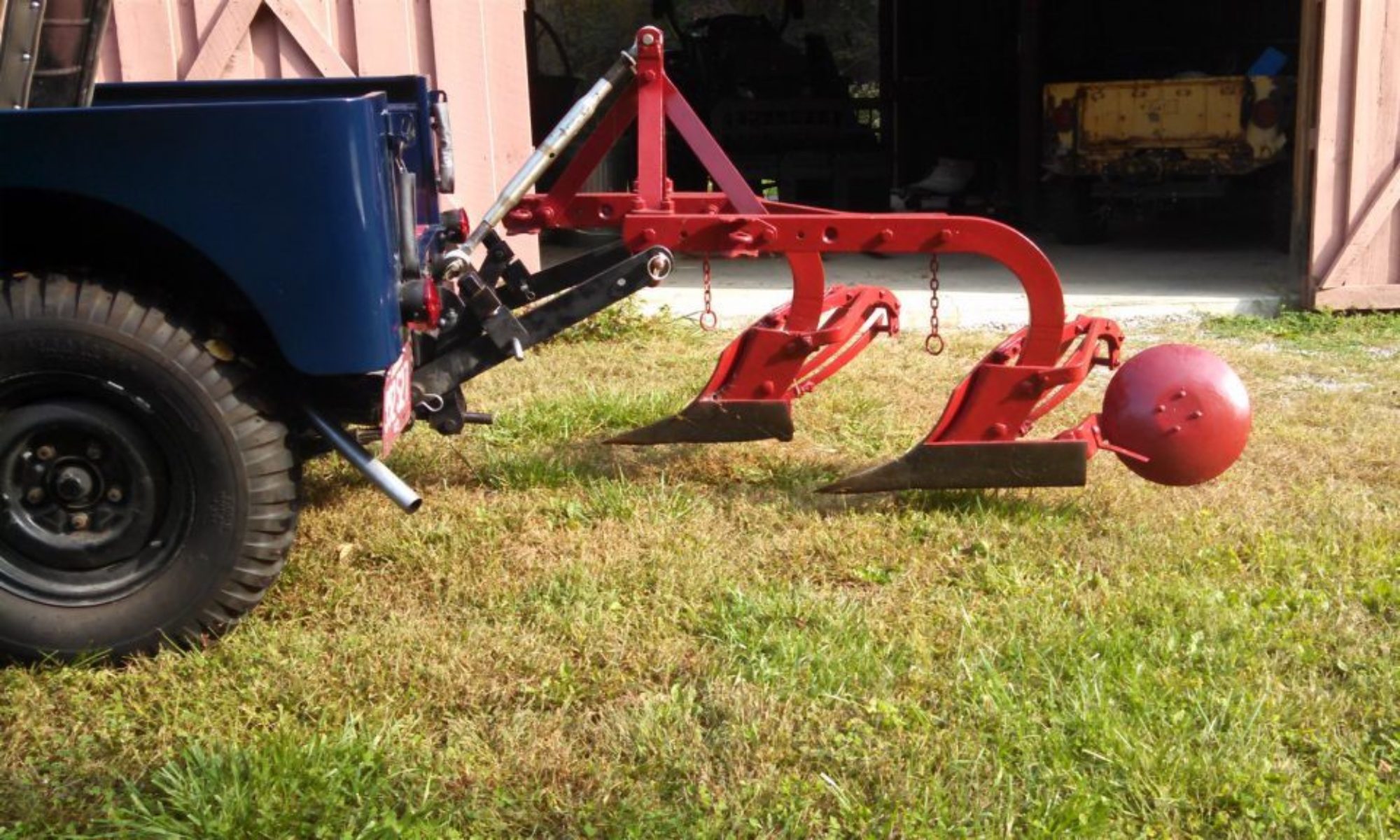
Monroe then reached an agreement with Willys-Overland to produce farm implements for Jeeps they were manufacturing. The implements would be made by American Bantam Company, which became a subsidiary of the Newgren Company.
Newgren and Willys-Overland would demonstrate their equipment together across the United States. They would show how a farmer could plow his field, then unhook the farm implements and drive his Jeep into town.
Some outside stockholders of American Bantam Company were dissatisfied with Monroe’s handling of the operation, contending it was being operated in a manner where Monroe’s interests were given consideration over American Bantam’s.
After American Bantam had gone bankrupt, a $2,000,000 suit charging mismanagement was filed against Monroe by American Bantam. After six months of negotiations and threat of action against Monroe by the Securities and Exchange Commission, an agreement was reached. American Bantam would drop its suit in return for $310,000 in claims and the dropping of $150,000 in claims Monroe had filed against the company.
The importance of this document.
There were two lawsuits that affected the Monroe-Newgren-Bantam period. Stockholders filed suit in Steinberg v. American Bantam Car Co. in early 1948, prior to the Monroe takeover. The $2M suit that William D. McIntyre, Jr. cites occurred while Bantam was in bankruptcy. We have created an American Bantam Post-WWII Timeline, and also asked our AI research assistant to tell us how these legal actions played out:
In the late 1940s, the collapse of American Bantam Car Company triggered a bitter shareholder revolt that exposed how far the company had fallen since its 1940 creation of the original jeep prototype. By 1947, Bantam was financially unstable—losing money, burdened with debt, and no longer a viable automaker. Its postwar survival strategy had tied it closely to Monroe Auto Equipment Company and related farm-equipment ventures, relationships that increasingly blurred the line between supplier and controller. Dissident shareholders, organized as an “Independent Stockholders’ Committee,” filed suit in federal court, alleging that Bantam’s management was denying them access to shareholder lists and proxy materials—effectively preventing a fair election of directors. In Steinberg v. American Bantam Car Co., 76 F. Supp. 426 (W.D. Pa. 1948), the court agreed that shareholder voting rights were being impaired and intervened to halt the annual meeting until a fair contest could be ensured, underscoring that corporate control—not day-to-day operations—was now the central issue.
What made the case significant was what it revealed beneath the surface. Court records and subsequent reorganization proceedings showed a company deeply entangled with outside interests. As Bantam slid into Chapter X bankruptcy around 1950, the U.S. Securities and Exchange Commission stepped in, as was customary, and flagged “the possibility of substantial causes of action against the parent company of the debtor” (SEC Annual Report, 1952). That language strongly suggested that Bantam’s affairs—including its dealings with Monroe-linked entities—warranted investigation for potential mismanagement or improper control. The SEC opposed efforts to quickly settle and liquidate the company, insisting that any insider relationships and transactions be examined before the case could be closed. Courts agreed, emphasizing that reorganization could not be used to quietly bury potential claims of “mismanagement or worse.”
In the end, however, the legal and regulatory pressure produced not a public trial but a negotiated resolution. Monroe agreed to a settlement—recognizing approximately $310,000 in claims owed to Bantam and forgiving another $150,000—after which Bantam’s trustees dropped further action (Monroe historical accounts summarized in FarmJeep.com). The SEC did not pursue a separate enforcement case. Bantam itself was not saved: its assets were liquidated, its Butler, Pennsylvania plant dismantled, and by the mid-1950s the company disappeared entirely. The irony is stark. The firm that had pioneered the jeep lost first the wartime production contracts, then control of its own postwar destiny, and finally its existence—its end marked not by a decisive courtroom victory, but by a quiet settlement and the realities of bankruptcy.
Embedded Sources
- Steinberg v. American Bantam Car Co., 76 F. Supp. 426 (W.D. Pa. 1948) – Federal court ruling on proxy access and shareholder rights
- U.S. Securities and Exchange Commission, Annual Report (1952) – discussion of Bantam reorganization and potential claims against affiliated companies
- FarmJeep.com – Monroe–Bantam settlement details and Newgren relationship analysis
- U.S. District Court (W.D. Pa.) reorganization proceedings, circa 1950 – Chapter X bankruptcy oversight and SEC involvement