
Last fall, I invited a friend to visit me at an antique farm-machinery show where I had our Jeep on display. He fell in love with the tractors he saw and bugged me to provide him with a list of books covering tractor history. When he had read those, he slyly asked me if there were any books on the Farm Jeep. I said, “No, but there should be a book.”
Some eight months later, there is a Farm Jeep book. It is a living e-Book at this point.
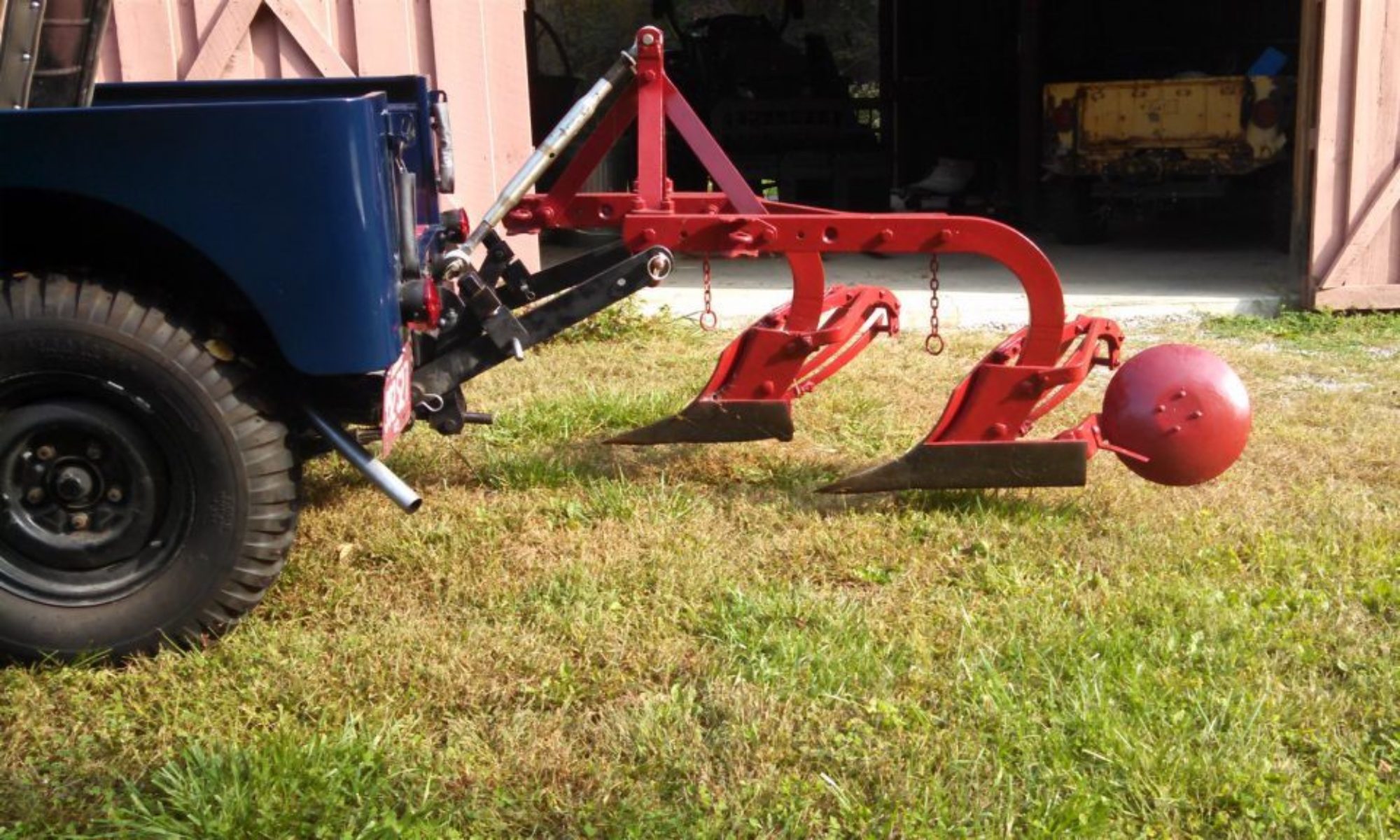
In May 2012, I took our 1949 CJ-3a Farm Jeep to a local antique tractor show. Evan and I had been restoring it for several years. We wanted a way to show it to the public, and we had attended the local show many times as antique tractor fans. I asked the first official I saw where I should park. He said, “Over there with the rest of the trucks.” I quickly realized I needed a way to explain — or perhaps justify — why a Jeep needed to be among the rows of John Deeres and Farmalls. That single event and what took place there began our journey for the next fourteen years. It changed FarmJeep.com forever.
When we go to a show these days, the Jeep is a rolling museum display with waterproof binders containing all kinds of data and ads. It has even appeared on YouTube. We spend as much time as we can with the Jeep, answering questions and listening to stories. But we can only attend so many shows.
We started this website to record our own history of working on our Jeeps. But we needed to have answers to the questions we were asked at the shows. Over the last fourteen years, I have written hundreds of pages and a dozen articles covering the Jeep’s agricultural history. All of this history is spread across these pages. And “spread” is the operative word.
We needed to get all this information organized, and an e-Book seemed a good first step. We launched this project now to coincide with a major milestone: 2026 marks the 80th anniversary of the true launch of the Farm Jeep, beginning with the birth of the Newgren Equipment Company in July 1946 and the announcement of the Love lift in September 1946.
We are already receiving feedback for improvements. That is part of the magic of an e-Book. We will be making additions to some chapters and adding new information as it is uncovered. We will post those here. If you find any errors or have ideas to improve things, just let us know.
You can read it for free at www.farmjeepbook.com on your phone, tablet, or desktop.
We hope you enjoy reading about a piece of farming history.
Barry