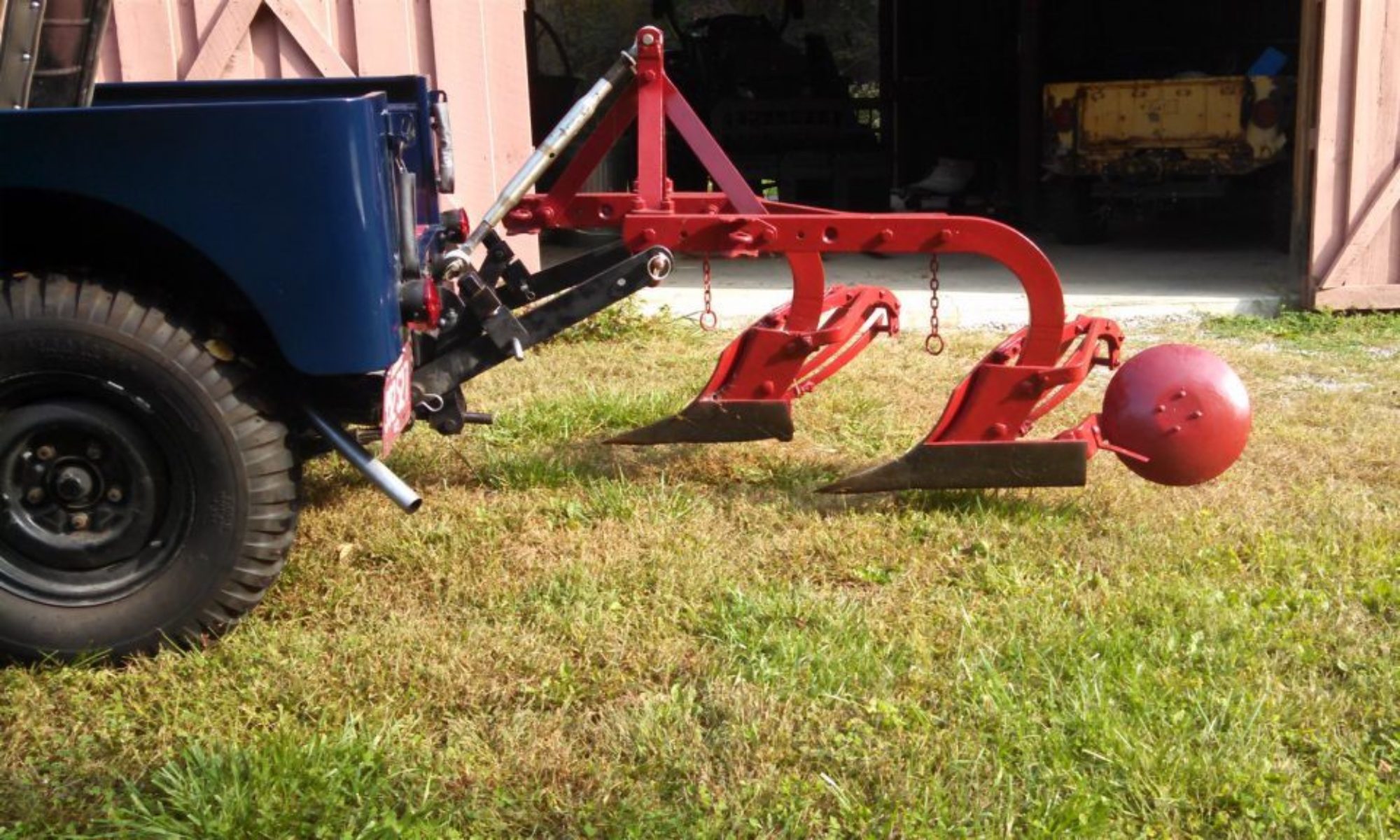

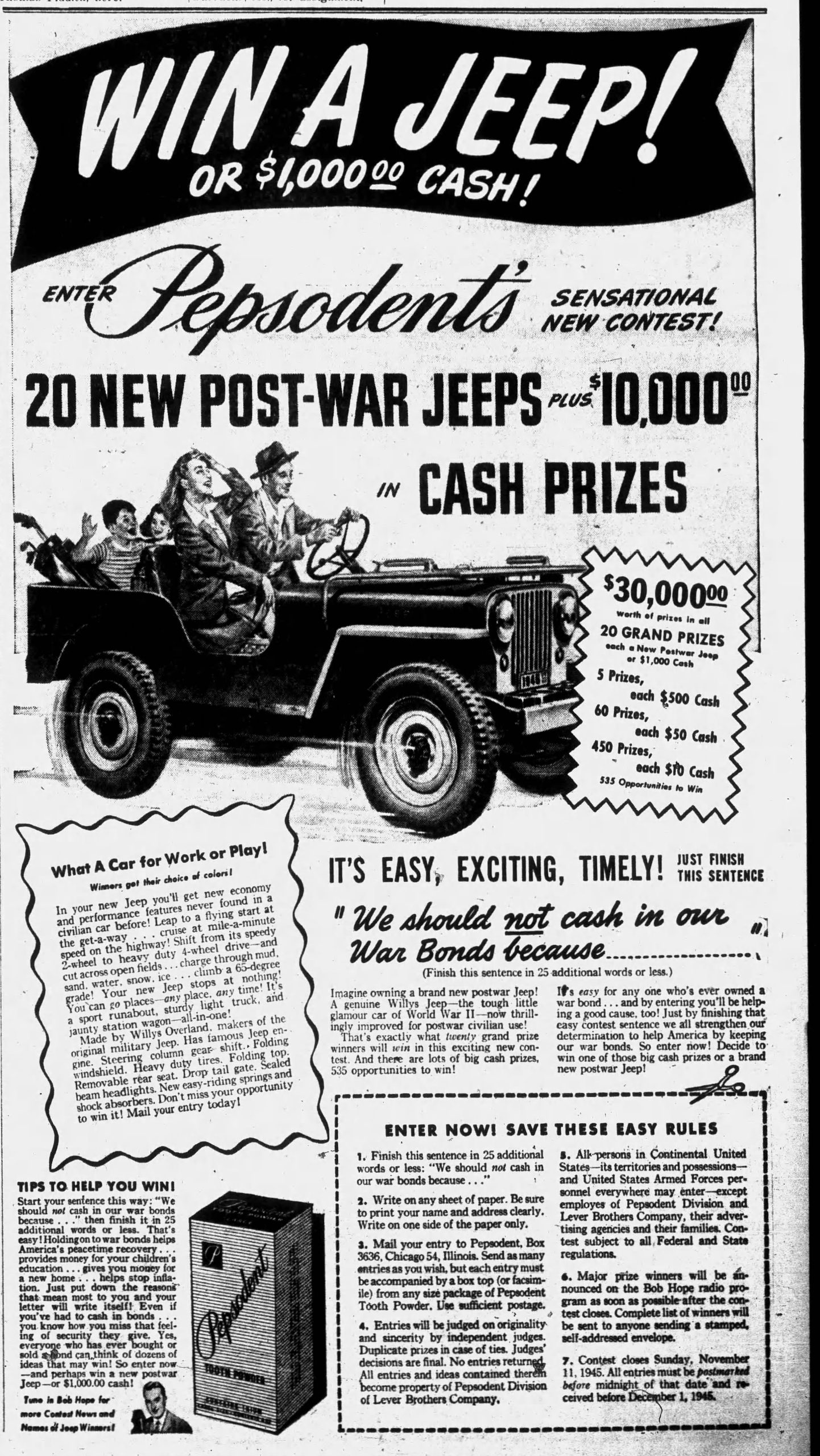
If you answered “At your local Willys dealership,” you would be only partially correct. You might also say at the local farm, implement, or feed store. Willys had dealerships within non-automotive establishments. This fact is part of a much larger story about the challenges of selling this new technology, and we are just beginning a long-term research project on the subject.
While this might not sound exciting, how we got involved in this venture is very much part of a real-life mystery. Check out Central Willys.
Meanwhile, back at the ranch.
We have undertaken a major project, connected to the 80th anniversary of the introduction of the Love/Newgren lift. If marketing research doesn’t sound exciting we guarentee that whats coming will be.
We found this photo online, over a year ago. The man at the wheel is Fredrick (Fred) Stobbe. Fred spent most of his adult life working as a tractor technician and tractor tester for Ford, Ferguson, Willys, and, finally, Ford again. At each stop, his testing was photographed by professional photographers. The photos were used by Fred, fellow technicians, and engineers to document the testing process and analyze the results.
Fred’s son Larry posted this picture, along with others, on social media. His father had died when hr was in his late teens, and he wanted to know more about this collection of photos. We connected with Larry last summer and, together, we built a story around the photos. You can read it here.
More discoveries
When we first encountered the photo, we only had Larry’s social media post information. Larry said his father had worked for Ford. Other photos posted by Larry showed Fred testing Ford tractors. We jumped to the conclusion that Ford must have been testing the Jeep as a tractor. While this proved not to be the case, it raised new questions about Willys’ testing programs.
We asked our team of “Willys Wizards,” a group of historians and researchers, for help. The results were amazing. We have, and will continue to, incorporate the new information we have learned into several pages here. We won’t rewrite Farm Jeep history, but we will make corrections and add new data. You can see some of this in the Robert Green story, thanks to historian Todd Pasiley.
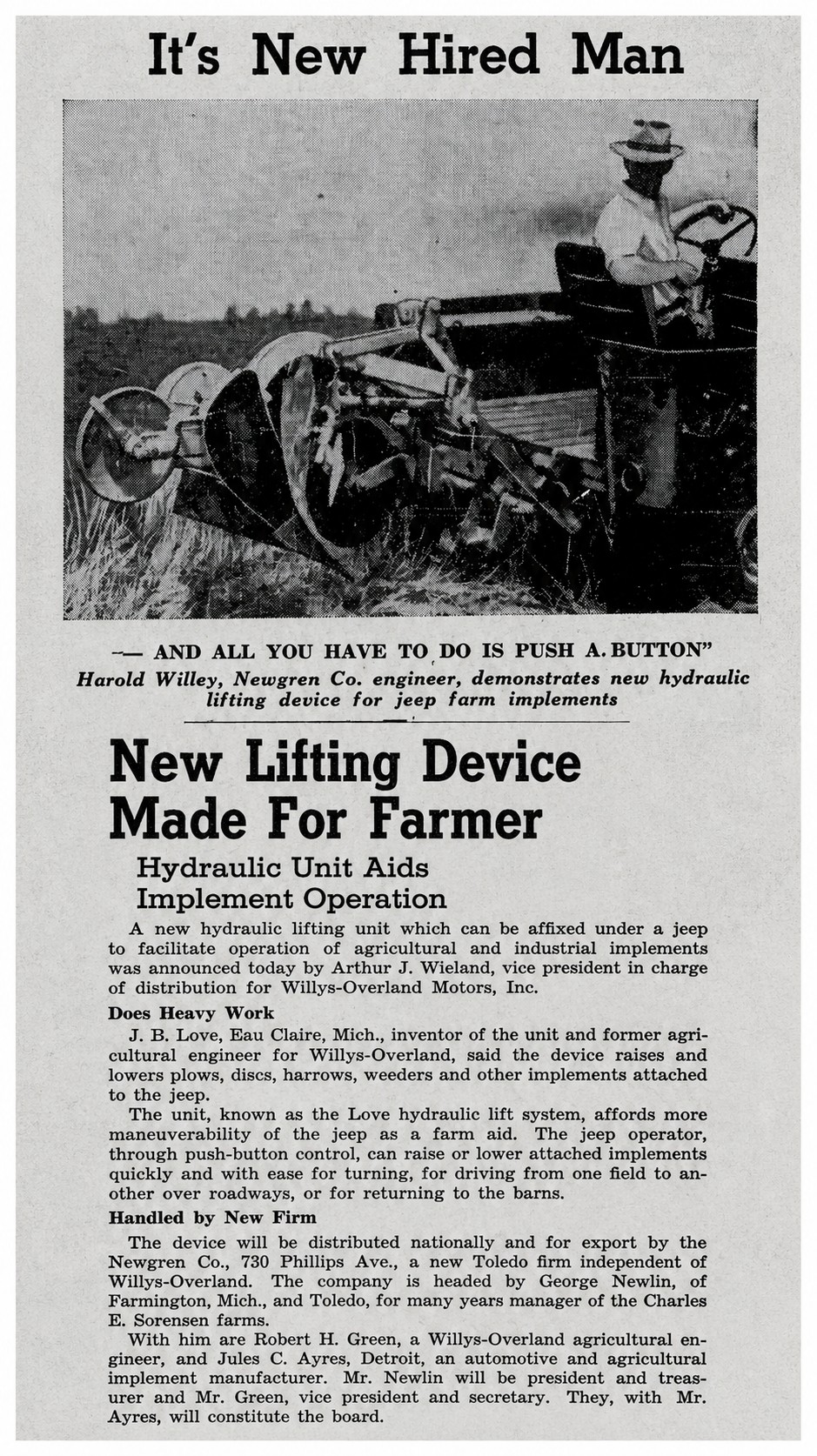
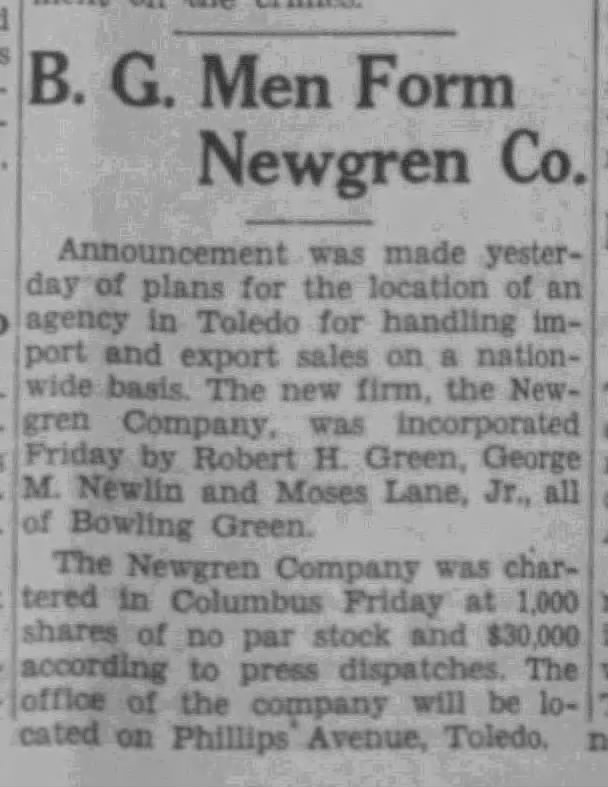
In 1946, the Love/Newgren Lift was introduced, and the Newgren Equipment Company was formed. Those events marked, for us, the true beginning of the Farm Jeep era. To commemorate the events, we plan to enhance the Farm Jeep site.
More Information, Better Organization
That is our goal for 2026. Over the past 20+ years, Farm Jeep has grown to more than 200 pages. We have gathered information on the Universal Jeep and the add-ons that made it a farm utility vehicle (FUV). In the process, we have also collected information on Jeep trucks, accessories listed in the Specialized Vehicles and Equipment Catalogs, Jeep tractors, and farm truck-tractors (as classified in The Tractor Field Book). This information is spread across the site. This will change over the coming months.
To keep the Farm Jeep focus, we are adding four new interest areas under the Home menu. For now, there are only a few entries in each.
Jeep Trucks – Farm & Utility
Jeep pickups and Forward Control models were on the farm and served in multiple roles. We believe they have a place in the Farm Jeep story
The Jeep equipment catalogs contained items from farm implements to trenchers and backhoes. Many of the add-ons created specialized vehicles that were part of the Farm Jeep story.
Yes, there was a Jeep Tractor, but there were also farm tractors with a direct connection to the Farm Jeep. Some were built from Jeep parts, and others used parts designed for the Jeep.
The Tractor Field Book was a tractor industry publication that listed manufacturers and specifications. It included a special section listing trucks that also functioned as tractors. It included the Farm Jeep. We have articles and stories on these Farm Jeep cousins.
Over the next few months, we will add more existing pages to each category. This will take some time, so please bear with us. We will also add new material from our ongoing research and invite others to share their stories.
This month, we have invited Dennis Goodenow to share his farm truck restoration story. We saw Dennis’ post on the OldWillys Forum, and think you will see how Jeep accessories weren’t just for the CJ. You will find it under the Jeep Truck section.
We look forward to a special year of celebrating all things Farm Jeep!
Thanksgiving came late this year, and Christmas will be upon us. A favorite annual event is seeing how many Jeeps you can spot in the classic movie Miracle on 34th Street. According to a decade-old CJ2a forum post, Keith Buckley spotted six. We are still looking for a couple. Bill Norris also commented that the Jeep was the official float vehicle. Even if you have seen the movie a dozen times, it is fun to try to spot the Jeeps.
Speaking of Jeep spotting, we posted back in April that we had seen what appeared to be a CJ2a with a Newgren lift being driven by a man who tested tractors for Ford. Barry has spent the past several months researching this photo and the man behind the wheel. He is working on the story, and it is a good one.
2025 is turning out to be a year when Farm Jeep items have found us. We are incredibly thankful that individuals have taken the time to write when they discover something unusual. In June, Brett wrote to say he had found a stash of implements for a Farm-Aid lift. We wrote about saving this bit of Farm Jeep history.
Recently, Kaleb from Missouri sent us this photo of a tag he found on “an old disc.” We will write more about this find. It does give us another interesting data point on both Farm-Aid implements and Transport Motor Company. TMC was a major West Coast Willys-Overland distributor before World War II and sold a line of specialty lifts (not based on the Ford/Ferguson system) and implements. TMC had a national distribution program, which we believe included the Farm-Aid line—another research project for the future.
Last spring, Kyle sent us a picture of a Newgren tag with a prefix we had not seen before. The “LL-1058” tag confirmed that Newgren had used a consistent model numbering system.
Just in the past few days, Paul from Indiana sent us the photo of a Newgren tag on a disc harrow. Based on the Newgren system, we could identify the implement as “Love Lift Harrow six and a half foot model.” Again, we will be writing more about this find.
This tag also shows that the relationship between Jabez Love and Newgren went beyond the first Farm Jeep lift. We will continue our research here, too. Stay tuned.
Somehow, the first of October went by unnoticed. That was mainly because we have been heads-down with researching several items. There won’t be much of an update this month, but things are happening!
Mystery picture
We reported last April that the above picture might have been taken at a Ford Motor Company test farm. New information has shown this not to be true. However, we don’t know where the picture was taken. We are using the advanced research capabilities now available in AI models to gain a deeper understanding of post-war tractor testing.
We are being cautious not to rely too heavily on AI, given our experience. Because the new models provide detailed source information, AI can be helpful if used with care.
At the same time, we have turned to a group of individuals whose knowledge and expertise is much greater than ours. They have provided more insights on how Willys was conducting tests and even more information on those (think Robert Green) involved.
In the coming months, we expect to solve the mystery, or at least provide possible solutions. Stay tuned!
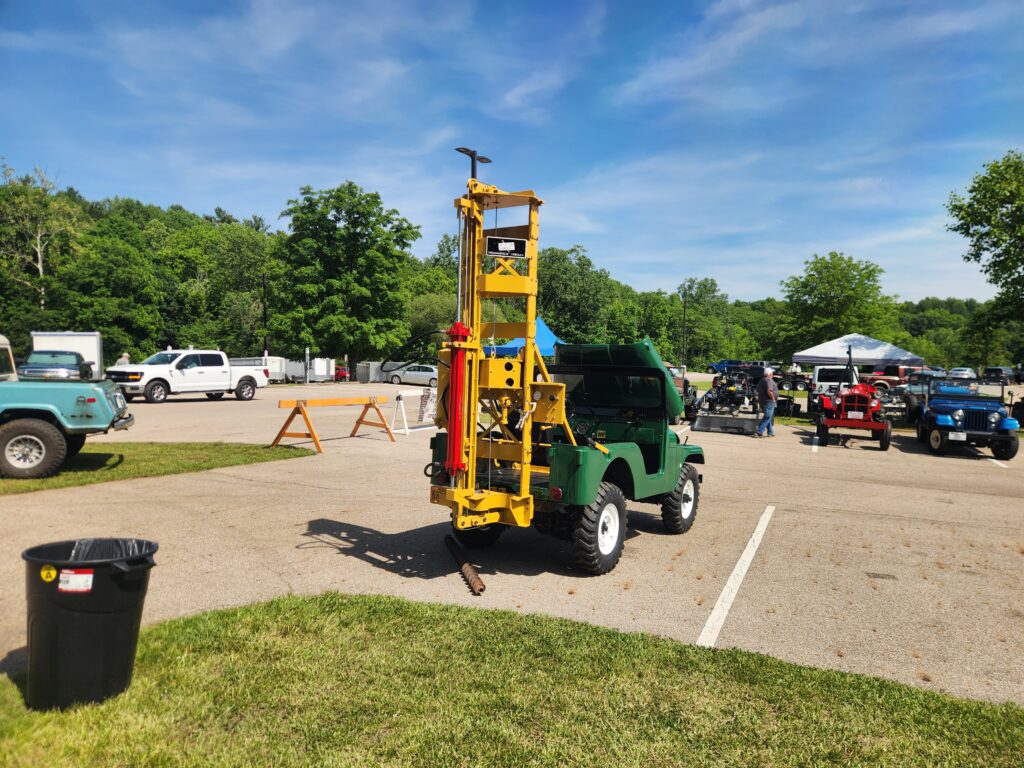
We have always enjoyed visiting antique machinery shows. They are places of discovery for us. However, they can also be a source of frustration when no information is provided about a machine. Our goal has always been to provide as much information as possible to those who visit our show display. Recently, we learned that a “walk-around” video of the display had been posted on YouTube.
This gave us the idea of posting other media we have found of the Farm Jeep display. We’ve added a new Farm Jeep Show Display page. In addition to the above video, you can see and hear (radio) interviews with Barry. We have posted additional farm show videos where the Farm Jeep makes a brief appearance.
We have updated (and will continue to do so) the Articles and Research page. We will post all of Barry’s past and future articles. We have added additional research resources as well.
Technical Information Updates
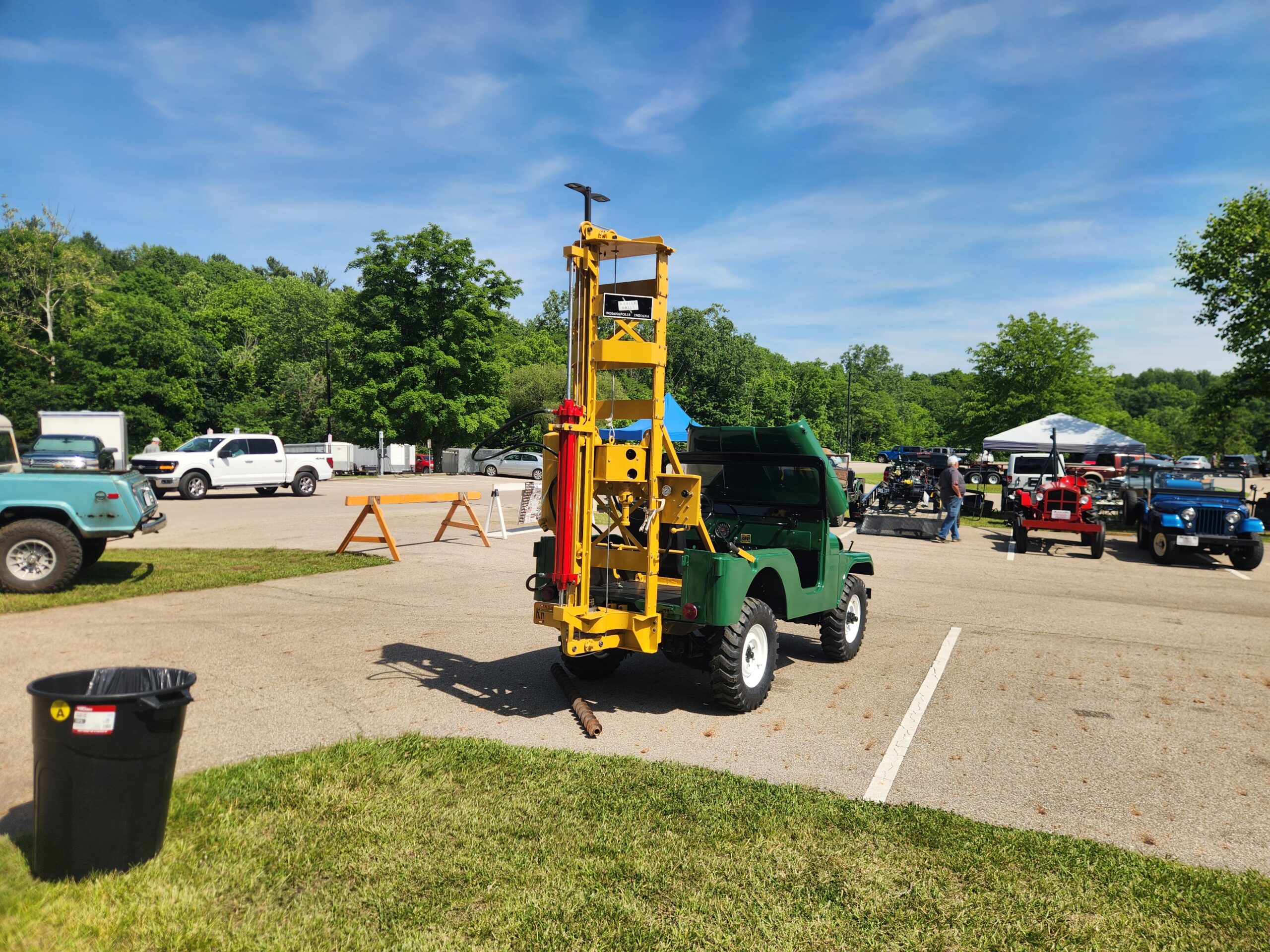
Scott Sperling has given us additional information on Jeep-mounted trenchers. Be sure to check out the updated Jeep Trenchers page.
Todd also sent us photos of a NOS governor kit he found. We’ve added those to the Engine Governor page
Making Hay the Jeep Way
We have updated the Haying page with a short video on haying out west in the 1950s, There is a Jeep involved, but the entire concept was new to us. We think you will enjoy it.
Brett was cleaning out a fence row for a neighbor in northeast Ohio. He found four implements with strange-looking attachment mechanisms. One of them had a tag, and he could read the words Farm-Aid for the Jeep. A quick search and he found us. You can read how these rare implements were reunited with the only Farm-Aid lift we know of here.
Ben sent us a story about how his FCs work at Windy Sage Farm. You can read the story here.
That didn’t work.
Back in January 2024, we posted about starting a hydraulic lift registry. We thought that, even though others had tried and failed, new software would make the creation of a database fast and easy. While the software does work, it has been a case of you can lead a horse to water, etc. The only updates we have received over the past year are from spammers. It was a good idea, but the project failed.
We will keep the “spotter’s guide“, but remove the data collection forms and the database. The data we have will be available to anyone who requests it. We will continue to update the database with any new information we might receive.
And things are looking brighter.
Although the registry project was a failure, we continue to uncover stories about the Farm Jeep. Stay tuned!
“The third week of July 1945 forever changed vehicle history as Willys-Overland made the grand public debut of the civilian Jeep and thereby unofficially launched the Sport Utility Vehicle market. A mass-produced, four-wheel drive, multi-purpose vehicle would now be available for the average consumer. Friday, July 18, was the official introduction date, which Willys proclaimed to be “Jeep Day.” So wrote Bill Norris in the Summer 2020 issue of The Dispatcher magazine. You can read the entire article here.
It appears the current owners of the Jeep brand have forgotten this milestone. At least we haven’t seen anything in the media – yet. Perhaps they are waiting for the actual day. We fear it is more likely that they aren’t aware of this historic day.
For our part, we plan to spread the word on social media and elsewhere that July 18th is “Jeep Day.” A day to go for a drive in your Jeep, take your Jeep to work, or celebrate your Jeep in any way you choose.
Shows, rusty gold, and trenchers
The show season is in full swing, and we have attended four events. At all the shows we attend, vendors sell used parts. While we don’t expect to find many Jeep parts at an antique tractor show, we do search for Farm Jeep parts. At the most recent show, we hit paydirt!
As soon as our display is set up, we head for the swap meet or vendor area. Barry immediately spotted a Monroe Lift top link among a collection of lift parts. For $5!
Speaking of dirt, our friend Scott Sperling has sent us information and documentation on the Go-For-Digger. You can check out the second “Jeep Approved” trencher by clicking on the picture.