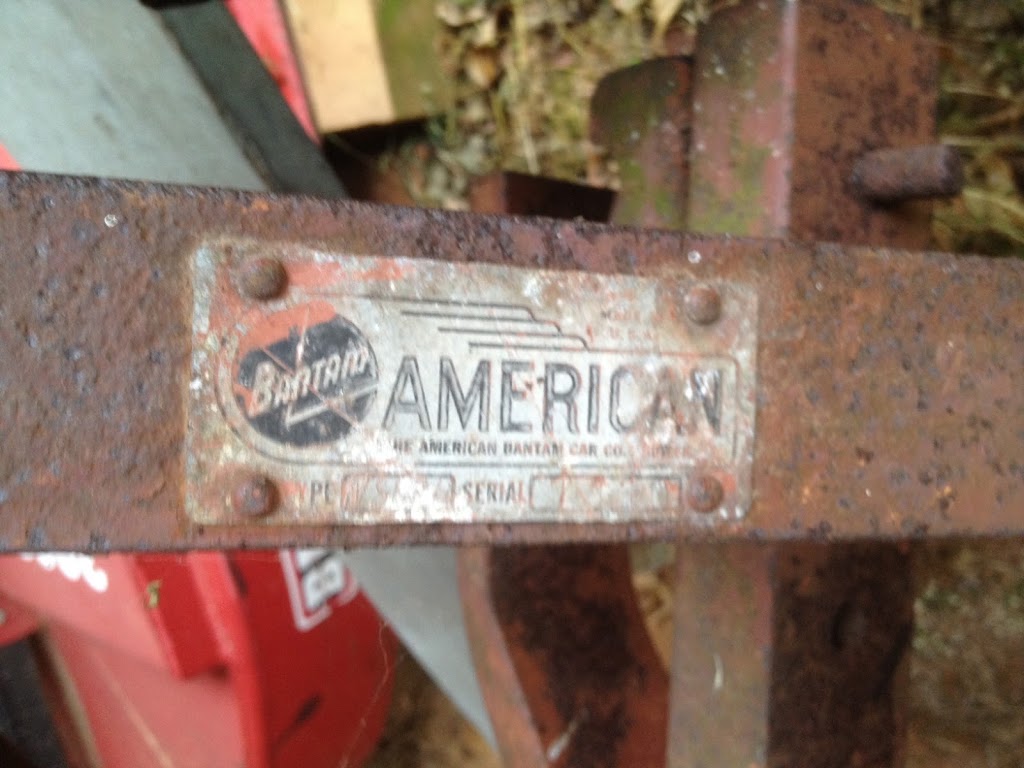
In February of 2015, we posted the great news that two Bantam plows had been found. You can read the first post here and the update here. David Tracy has just posted an article on his trip to the Omix-ADA headquarters titled “The World’s Biggest Aftermarket Jeep Parts Company Is My Paradise“. Among the pictures of the company’s museum is a Bantam plow. A quick note to Omix-ADA has confirmed this is one of plows found by Ted.
And the winner is……
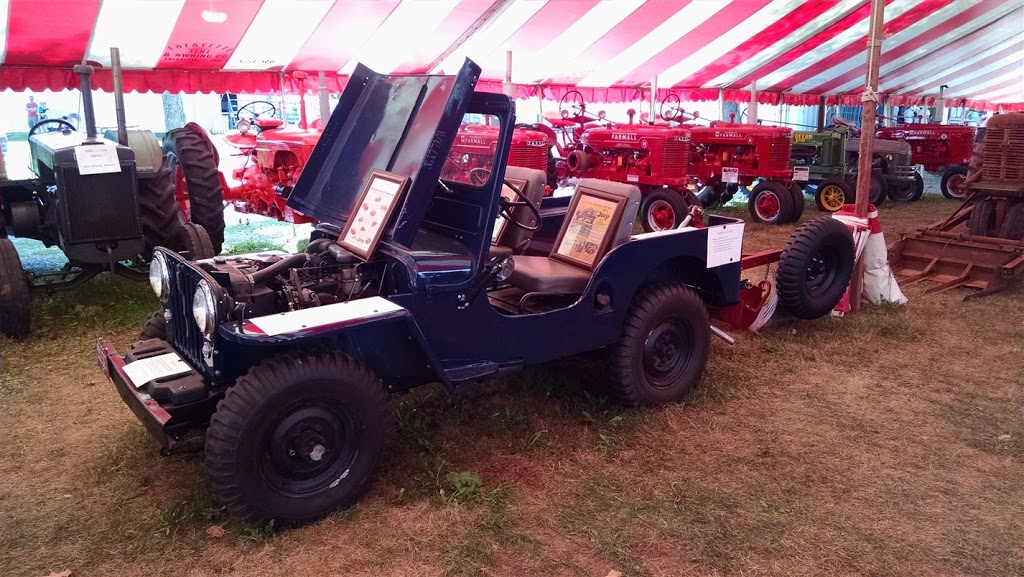
Farm Jeep is at the county fair this week. We were at the fair a couple of years ago, but without the plow attached. We were given a blue ribbon for “best in class”. As the only jeep in the tent, we were pretty sure we could repeat that feat.
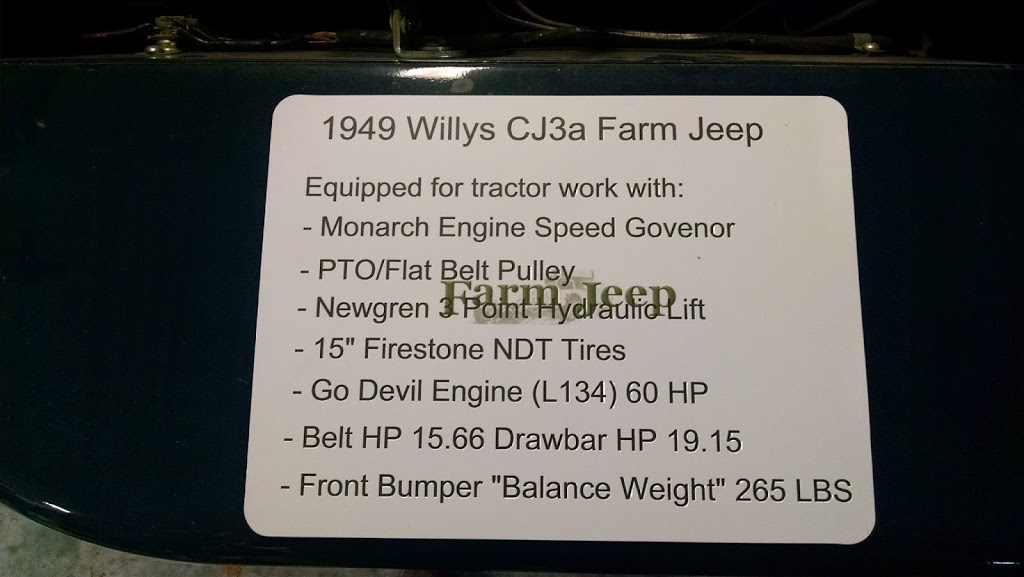
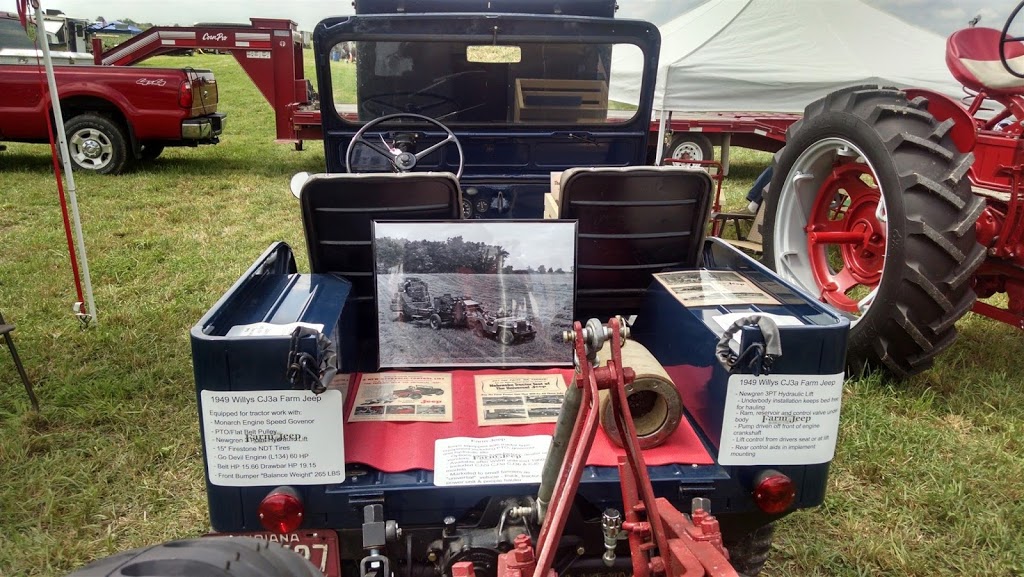
This year has been different. We were given a prime location at the front of the display, in the center of the tent. The jeep had been a big draw at its last appearance and the organizers want it to be in a prominent spot. We have the same display we use at tractor shows and visitors receive a brief bit of farm jeep history.
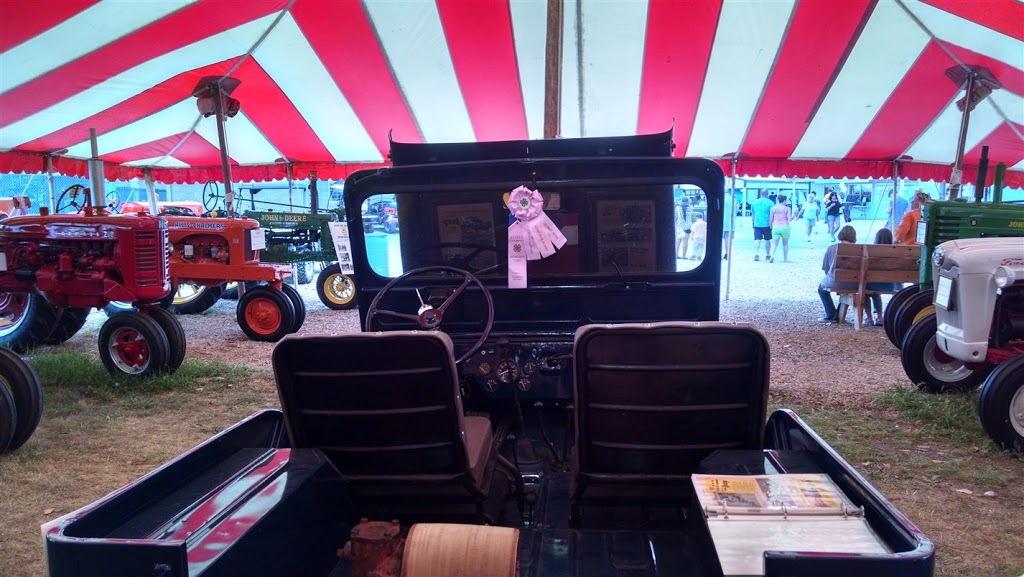
When we arrived at the tent for our daily visit, the director of the exhibit said that judging had taken place and we had been awarded a ribbon. We walked around to the jeep and there where 3 ribbons hanging from the mirror! The jeep was sporting Reserve Grand Champion ribbons. Pretty cool…
The judge for the exhibit was from northern Indiana. He had divided the exhibit in to two classes; general tractors and agricultural machinery. The latter class included self propelled machines and tractors with attachments. With the plow attached. the jeep was included in this class. There were only 5 machines in this class, so our odds were good. Still we enjoyed the recognition.
The winner is….
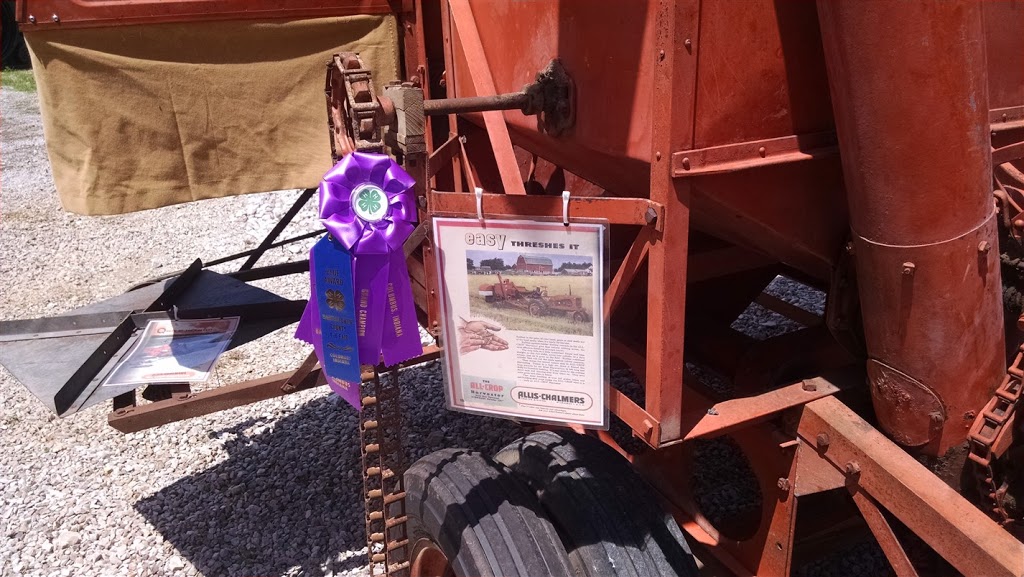
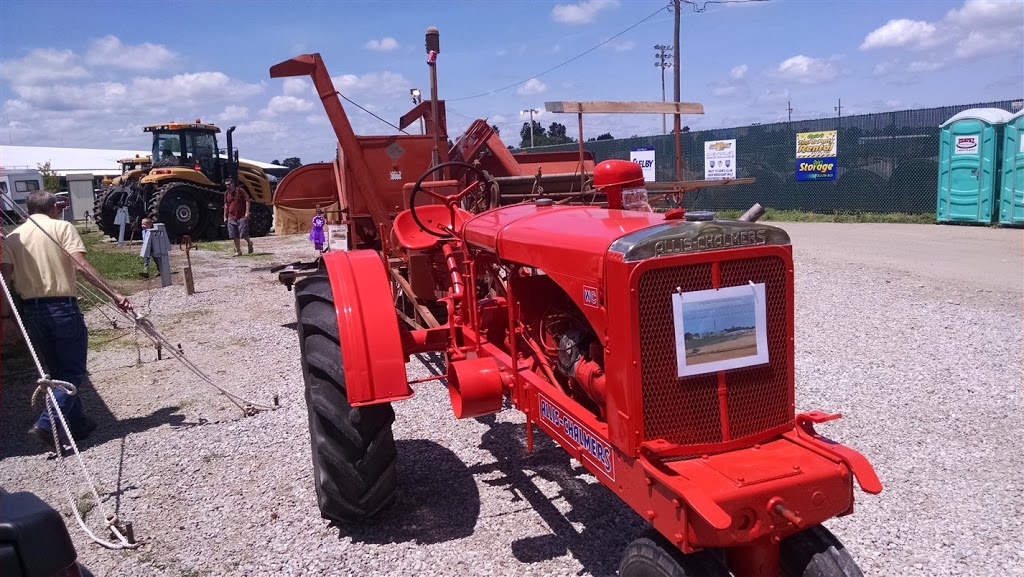
Since we were number 2, we were curious about the winner. It is a beautifully restored 1938 Allis-Chamlers WC tractor pulling a 1941 grain harvester. This exhibitor had also provided some history and that is, we are sure, one of the reasons it received the Grand Champion. Congratulations!
Happy 4th, a thanks and an apology to Newgren
Its the 4th of July and Farm Jeep is heading to the county fair! We’ve been invited to be a part of the antique machinery exhibit, and as the only farm jeep entry, we are sure to be a winner. We will show off our ribbon later.
Thanks to those of you who have given us nice compliments and good suggestions for moving Farm Jeep forward. Over the next few months we will be incorporating those changes.
Meanwhile – one more try
We have, as recorded here in gruesome detailed, been chasing leaks and problems with the Newgren lift. The only possible remaining leaks had to be on top of the reservoir. That meant lowering the lift one more time. For future reference, we took notes and lots of photos of the disassembly process. We plan to post them at a later date. For now, we will simply summarize the process.
Removing the lift or just lowering as in this case involves a few simple steps. You need to remove the PTO shaft and the rear gear box. Next you need to support the lift frame and remove the bolts at the front and all the bolts at the rear. Then lower the unit, with all the hoses still attached.
The strange looking object pictured here is the jack we use to raise/lower the lift. We took a Harbor Freight low lift transmission jack and added a “jig” made of scrap metal. While not pretty, it makes the raising/lower of the lift a one person job.
With the lift lowered, we could reroute some of the hoses and remake connections with thread sealer made for hydraulic systems. The lift was then put back in place by raising the jack and replacing the bolts. But before we replaced the the PTO, we decided to test the lift.
And the good news is.
The lift worked perfectly! It lifted the 450lb plow with ease. No foaming or pressure build up in the reservoir. There is only one remaining problem – the lift starts to slowly drop once it is raised. It doesn’t matter if the pump is running or not.
The bad news is that we believe we have damaged a seal in the cylinder. During some of our efforts to correct problems, we introduced excessive pressure on the seals. That means we will need to have the cylinder rebuilt in the “off season”. For now, we will simply place a piece of steel between the cylinder cap and the lift block to lock the lift in the up position when we need to transport the plow for any distance.
What we have learned.
Over the years, we have tried to learn as much as we can about hydraulic systems. Because the Newgren lift’s hydraulic system is different than modern systems, we questioned the engineering. What we have learned is that it is in fact a simple and even eloquent solution to a problem for single action cylinders.
Single action cylinders require a port or breather hole to allow air to escape or enter as the piston is moved in and out. That port is normally open to the environment. With the cylinder on the farm jeep just inches from the ground, it is in an extremely dirty/dusty area. So how do you keep the port clean and open? You design a “closed system” by using and reusing the air in the top of the reservoir. So the mystery “bleeder hose” that runs from the bottom of the cylinder to the top of the reservoir is a simple means of getting clean air in/out of the cylinder. No dirt or dust can enter the cylinder.
So we humbly apologize to those engineers at Newgren who designed this lift system. It was only our lack of a basic understanding of hydraulics that caused many of our problems. We finally get it and look forward to years of trouble free operation.
A little help here – and more on Newgren hydraulics
Let us count the ways – Jeeps working on the farm and all around town
Meanwhile, back at the farm
Update – While preparing the Golden Eagle to sale, Barry realized that he just couldn’t do it. So Matte found a new home and the Golden Eagle will become a new project.
Plows and More Plows – At Least in Printed Ads
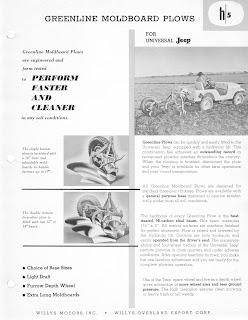
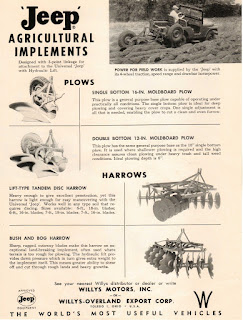
Here at Farm Jeep, we have focused on flat fender jeeps. But an ad appeared on e-bay that clearly shows agricultural activities were still an important part of the new CJ5 model in 1955.
The jeep pictured in this ad may be a prototype (note the split windshield)(1), but here we are with Jeep promoting its agricultural implements. Of special interest to us are the graphics used for the two plows. They are identical to those used by Newgren in the late 1940s. It would appear that the original Newgren design was alive and well.
Still a mystery to me
Whenever we have a plow question, we contact our friend Clint Dixon. As always Clint had some interesting facts and history to help us learn more, if not solve our latest mystery.
Clint sent his own ad, staring the new CJ5. Here is what Clint had to tell us –
Here are Clint’s thoughts
Update – July 2021
Barry found himself hunting for information in Bowling Green, Ohio while doing research on a Jeep promotional movie. On a hunch he decided to again tackle the question of who owned Green Manufacturing.
Several online attempts to contact the current owners failed, but a phone call did yield a glimmer of hope. The person who answered the phone had been a long time employee, but didn’t have any knowledge of farm implements being produced. She did say that the company had been bought and sold at least a couple of times since it was Green Manufacturing.
Barry then contacted the Wood County Museum, sending them a copy of the “Greenline” plow ad showing the Bowling Green address. The next day he received a note saying that they had found information about who had purchased the original Green Manufacturing and provided contact information.
Here is what we have learned from Jeff Snook, former owner of Green Manufacturing and now owner/operator of Snook’s Dream Cars (www.snooksdreamcars.com):
Hi Barry,
My history with Green Mfg. did not include any Jeep connection, but here is what I remember hearing.
Bob Green, founder of Green Mfg. somehow was connected with Jeep in the 50s I believe. I recall hearing stories of him making implements. Don’t recall which, but it looks like plows based on your literature. I do recall he made post hole diggers for Jeeps as we continued that business into the late 1990s. But the ones we made were sold through farm implement dealers and not Jeep related. They were all 3-point hitch mounted.
We continued using the Greenline name on our posthole diggers and other implements (wagon gear & scraper blades) until I sold the business. Green Mfg also made hydraulic cylinders (turned out to be the largest part of our business) and I’m sure they evolved as part of the Jeep 3-point hitch connection.
Here is the Green Mfg. ownership history
1968 Robert Green sells to Wilde Manufacturing (Michigan company)
1969 William Snook hired by Wilde to run company
1974 William Snook buys company from Wilde & Jeff Snook comes on board
1989 Jeff Snook buys company from Bill Snook
1998 Jeff Snook sells company
Bob Green stayed on for 5 years as sales manager once he sold the company. He was an old car guy (like my Dad) and was involved in making overdrives for Franklin automobiles. As far as I know, he continued in the overdrive business until he passed away.
As shown, I sold the business in 1998 and all the records are gone, along with most of the folks that were around during that time. If I can find any old employees that might remember, I’ll send them your way.
At last!
Now we have some of our questions answered. We will continue to search for more information, but are happy to know that Robert Green continued to sell the fine Newgren line of implements.
- Ventilating windshields were an option on the early CJ5, not an indication of a prototype.
Historic Trip – Monroe Lift Museum Exhibit and Antique Mall Willys Corporate Report
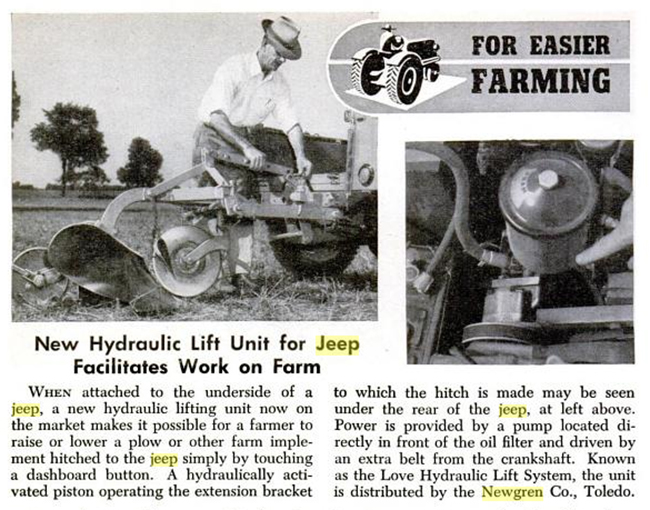
On a recent road trip Barry made a couple of Farm Jeep related finds. The first was a planned visit to the Monroe County Historical Society Museum in Monroe, Michigan. Inside this excellent museum is an exhibit dedicated to the Monroe Auto Equipment Company (MAECO). This is the company that made the Monroe hydraulic lift for farm jeeps and still makes Monroe shocks.
The exhibit’s curator is retired MAECO engineer Jerry Wittkop. Jerry has assembled documents, photos, advertisement materials and samples of some of the many products made by this 100 year old company. Products ranging from the world famous shocks to golf balls. And of course, there is the Monroe hydraulic lift. In addition to a lift housing, the display includes a picture of the farm where jeeps equipped with the lift were tested and demonstrated. There is also a Monroe tractor seat on display.
Jerry’s long career and personal involvement with the family that owned the company (until its sell to Tenneco Inc. in 1977) has resulted in a display that is informative beyond the normal corporate history. We had always wondered how Monroe ended up making hydraulic lifts for the jeep. As Jerry explained (and demonstrates through the exhibit), Monroe made products that could make use of their expertise in hydraulic systems. Some of that expertise came from the company’s work with World War II tanks and aircraft hydraulic systems.
If you are in the Detroit area stop by and visit the museum and the MAECO exhibit.
Barry and his wife Paula like to take interstate trip breaks by stopping at antique malls. Barry likes to search for jeep related items. Most of the time that means old magazine ads. The same trip to the Monroe museum found them stopping at a mall in a small town off the interstate. Barry quickly found a booth with a nice selection of automotive ads. In among the ads was a Willys Overland financial report for the period ending March 31, 1946.
We have posted selected pages of the report here. The most interesting parts of the report are in the narrative, including the fact that no jeeps were produced during the final 3 months of 1945 because of strikes at suppliers. There is also the disclosure of the purchase of the Wilson Foundry & Machinery Co., the supplier of Willys engine blocks.
The report also discusses the company’s design philosophy and introduces the lineup of the CJ2a, wagon, pickup and the “delivery sedan.” An interesting look into the early days of the CJ.
Restoring the Newgren Plow – and Candle Magic
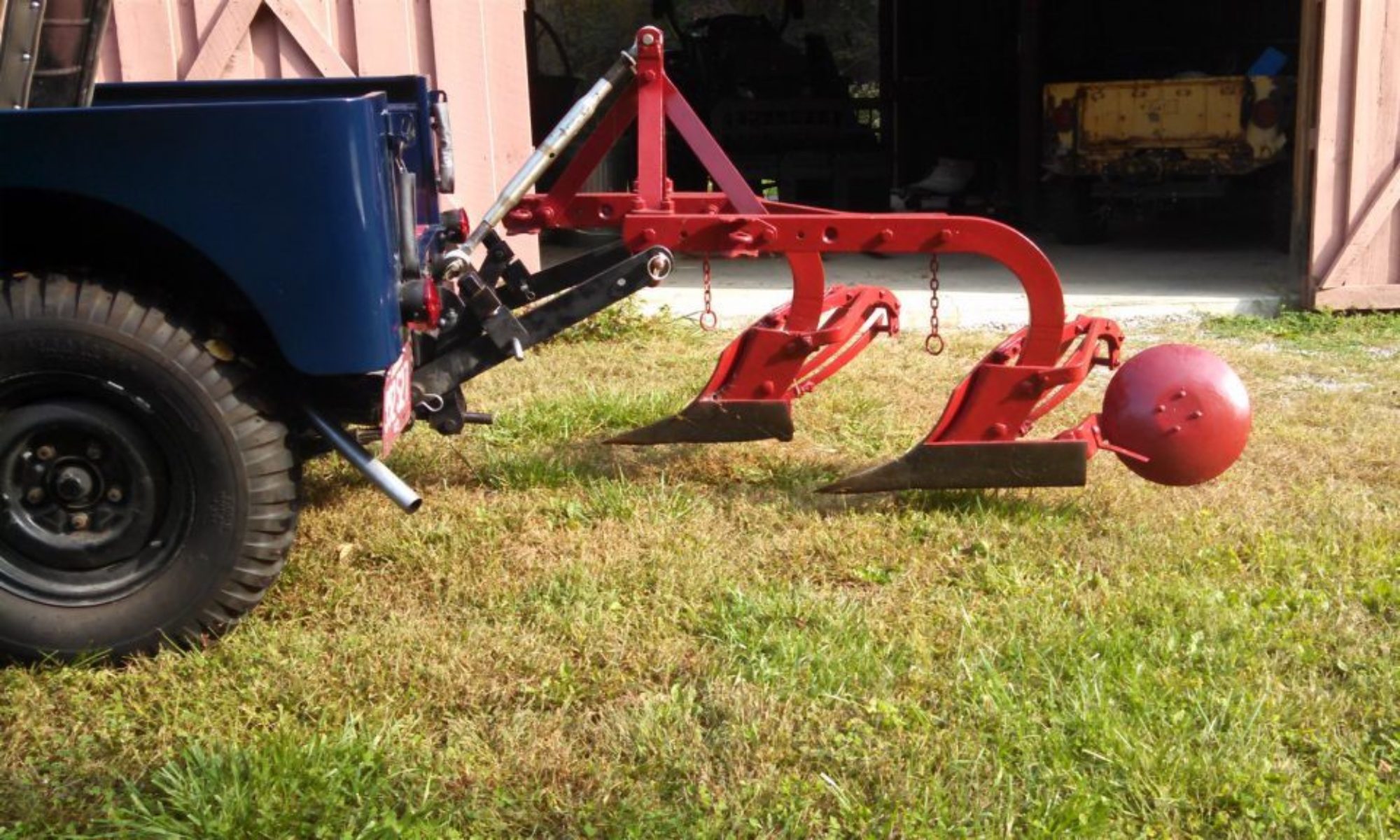
The plow uses the jeep’s spare tire mounted on the landside (opposite the furrow) of the plow as a depth control. The adjustable bracket allows the operator to set and maintain the depth of the furrows. The landside wheel attachment is a simple affair: a hub matching those used on the jeep’s axles, a short spindle (axle) that holds the hub and a steel block with a “U” bolt for locking the assembly to the plow beam. The original assembly, as shown in the above picture of Clint’s restored plow, is a nicely engineered and machined part. While not authentic, we chose to build something with off-the-shelf parts. Since our focus is on the jeep and not the plow, we think this is a reasonable compromise.
Hubs and spindles used for building trailers are readily available online and at many farm supply stores. Finding a hub that matched the jeep’s 5 lugs on a 5 ½” pattern was a bit harder. Once again, we turned to our friends at TractorByNet.com for some help and we soon had a source for both the hub and spindle (Northern Tool). Clint was able to supply us with the critical dimension we needed to give to are welding/machine shop (6.25” from the face of the hub to the plow beam). The shop fabricated the “U” bolts and cut and welded the spindle to the steel block. Simple, but it works. Once you have the wax in there just take two hammers and hold one under the side of the nut and then hit the opposite side. You don’t need to hit hard you just want to set up a vibration between the nut and the bolt to help the wax penetrate. For the same reason it will help to hit the bolt on the head while it’s warm. Do this several times and you won’t even need a cheater pipe on your breaker bar.
I don’t like to get nuts red hot with w torch when I’m trying to remove them as it seems that once they cool they shrink and are tighter than they were before. Good luck
I should add that an impact wrench set low enough so as not to twist off the bolt also sets up enough vibration to loosen the bolts once they have wax on them.”
This was perfect, since we had a small propane torch and a ready supply of candles. Barry couldn’t wait to try this technique. He followed the simple instructions and with the help of a cheater bar had the first large nut moving. Using more wax and heat from the small torch, he quickly had the first coulter/joiner assemble off without damaging any of the bolts.Update – The completed project is shown in the photo at the top!
Shows Seals & Springs
After a long winter we needed to get the 3a ready for the first spring antique machinery show here in central Indiana. Evan and Barry spent a day make the final adjustments to insure everything was working as it should. Part of the testing involved getting the jeep with the plow attached on the car hauler trailer.
But first, Barry needed to re-install the PTO rear gearbox. He had taken some time during the winter to replace a leaking seal. The seal on the output had been leaking for the past year. Thanks to folks on the CJ3A Page (Installing and Rebuilding a Rear PTO Setup) and on the CJ2a forum, we found the correct seal and made the necessary repairs.
As the jeep is driven up the loading ramps of the trailer, the front of the jeep goes up and the rear goes down. The combined jeep with plow is around 16’ long. The good news is that we were able to load the jeep with the plow without major issues, the plow barely dragging as we drove the jeep onto the trailer.Now I get it
On a final note, this was the first show with the plow mounted on the jeep. It was a great success. With the plow on the back of the jeep, visitors immediately got the farm jeep concept. With just the lift, it took a lot more explanation. While it is more work to take plow, we think it is well worth the effort.